
BLOG
The Complete Guide to
Upskilling & Reskilling:
How Organizations Build Future-Ready Workforces
Author: Ramesh Ramani
BLOG
The Complete Guide to Upskilling and Reskilling: How Organizations Build Future-Ready Workforces
Author: Ramesh Ramani
Table of Contents
Why Skills Development Matters?
Common Challenges in Skills Development
Benefits of Upskilling and Reskilling
How to Build an Upskilling Strategy?
Upskilling for Digital Transformation
Summary
Upskilling and reskilling help organizations close capability gaps, support digital transformation, and prepare employees for new roles as technology and business needs evolve. For large companies, skills development is not just a training initiative. It is a strategic system for identifying skill gaps, building workforce capabilities, and adapting to change.
This guide explains how modern organizations approach skills development, including how to define upskilling and reskilling, identify critical skills, design effective training programs, and measure outcomes. It also explores the role learning platforms play in supporting scalable skills programs across global teams. For organizations facing rapid technological change, the ability to continuously develop skills is becoming a core business capability.
Key Terms:
- Skills Development
- Upskilling
- Reskilling
- Skills Gap Analysis
- Competency-Based Learning
- Skills-Centric Training
- Workforce Transformation
- Digital Skills
What is Skills Development?
Skills development is the structured process of identifying capability gaps and helping employees build the knowledge and competencies needed to perform effectively in their roles.
In modern organizations, skills development serves several purposes:
- Improving workforce capability
- Preparing employees for evolving job requirements
- Enabling innovation and digital transformation
- Supporting long-term career development
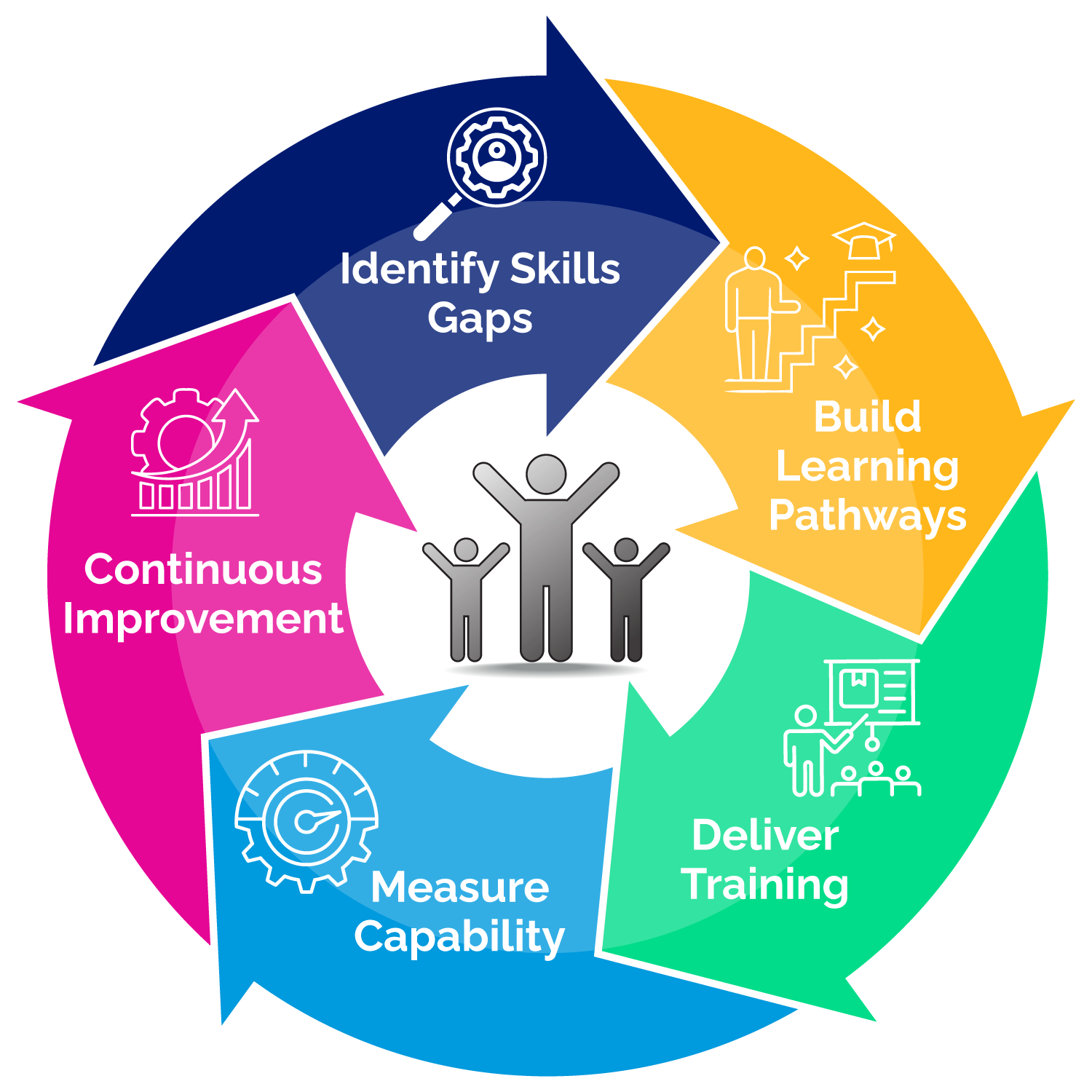
Skills development programs typically involve several stages:
- Identifying skill gaps across teams or roles
- Designing learning pathways to address those gaps
- Delivering training through digital learning platforms
- Measuring improvements in capability and performance
Large enterprises often approach this through skills frameworks or competency models, which map required capabilities to job roles and career paths. This structure helps organizations connect learning programs directly to workforce needs rather than delivering generic training.
Skills development also increasingly extends beyond employees. Many organizations provide training to partners, contractors, franchisees, and other extended enterprise audiences. Supporting these diverse audiences requires learning systems that can manage multiple training programs while maintaining governance and reporting.
What is Upskilling?
Upskilling refers to the process of helping employees improve or expand the skills they already use in their current roles.
Rather than preparing workers for entirely new jobs, upskilling focuses on strengthening existing capabilities so employees can work more effectively, adopt new technologies, or take on more advanced responsibilities.
Examples of upskilling include:
- Training employees to use new digital tools
- Teaching advanced technical skills
- Helping managers develop leadership capabilities
- Improving data literacy or analytical skills
Upskilling initiatives often emerge when organizations adopt new technologies or change business processes. For example, the introduction of artificial intelligence tools, automation platforms, or advanced analytics systems often requires employees to learn new technical and analytical skills.
Many organizations now treat upskilling as an ongoing process rather than a one-time initiative. Research shows how widespread this need has become. According to McKinsey, 87% of companies report that they either currently face skill gaps or expect them within the next few years. Continuous learning programs help employees adapt to evolving roles and support long-term workforce agility.
Learning platforms play an important role in enabling these programs by delivering training, tracking progress, and connecting learning content to specific skills or competencies.
What is Reskilling?
Reskilling focuses on preparing employees for new roles or responsibilities when their existing skills are no longer sufficient.
Organizations often pursue reskilling when:
- Technologies replace certain tasks
- Business priorities change
- Employees transition into different roles
- Industries undergo major shifts
For example, a company introducing automation may reskill administrative employees to work in data management, analytics, or customer support roles.
Reskilling initiatives are particularly valuable during large-scale organizational changes because they allow companies to retain institutional knowledge while helping employees transition into new positions. As technology adoption accelerates, many roles are evolving rapidly. The World Economic Forum’s Future of Jobs Report estimates that 39% of workers’ core skills will change by 2030, highlighting the growing need for structured reskilling programs across industries.
Successful reskilling programs typically include:
- Clear role transition pathways
- Structured learning programs
- Mentoring or coaching
- Opportunities to apply new skills in real projects
Organizations that invest in reskilling can reduce hiring costs while improving employee retention and internal mobility.
Extended enterprise blind spots
Dealers, franchisees, contractors, and partners often represent compliance exposure, yet fall outside core HR systems and standard reporting.
Upskilling vs. Reskilling
Although the terms are often used together, they describe different approaches to workforce development.
| Upskilling | Reskilling |
|---|---|
| Improves skills used in a current role | Prepares employees for a different role |
| Builds deeper expertise | Builds new capabilities |
| Supports career growth within a job path | Supports career transitions |
| Often technology-driven | Often role-change driven |
Both strategies are important for modern organizations. Upskilling helps employees stay effective as technology evolves, while reskilling allows companies to adapt their workforce as business priorities shift.
Together, they form the foundation of a broader skills development strategy.
Why Does Skills Development Matter Now?
The pace of technological and economic change is reshaping how organizations think about workforce capabilities. Automation, artificial intelligence, and digital transformation are altering the skills required across nearly every industry.
The need for reskilling is growing as technology reshapes job roles. The World Economic Forum estimates that 50% of employees will require reskilling as new technologies are adopted across industries.
As a result, companies are increasingly treating skills development as a strategic priority rather than simply a training activity.
Research from global workforce studies consistently shows that many organizations face significant skills gaps. These gaps can slow innovation, reduce productivity, and make it harder to adopt new technologies.
Skills development programs help organizations address these challenges by:
- Improving workforce adaptability
- Enabling digital transformation initiatives
- Strengthening employee engagement
- Supporting long-term competitiveness
For leaders responsible for workforce development, the challenge is not simply delivering training. It is creating systems that allow employees to continuously build new capabilities as roles evolve.
This is why many enterprises are shifting toward skills-based learning models, where training programs are aligned with specific competencies and career pathways rather than isolated courses.
What are the Common Challenges in Skills Development?
Despite growing investment in workforce training, many organizations struggle to build effective skills development programs. The challenge is rarely the availability of training content. More often, it lies in coordinating learning initiatives across complex organizations.
Some of the most common challenges include:
Identifying Skills Gaps
Many organizations lack clear visibility into the capabilities of their workforce. Without reliable data about employee skills, it becomes difficult to determine which capabilities need to be developed or where training programs should focus.
Skills gap analysis often requires combining data from performance reviews, workforce planning initiatives, and learning systems to create a clear picture of current capabilities.
Aligning Training With Job Roles
Training programs are sometimes delivered as generic course libraries rather than structured development pathways tied to specific roles.
When training is not aligned with job responsibilities, employees may complete courses that do not directly support their day-to-day work. This reduces the impact of learning initiatives and makes it harder to measure outcomes.
Role-based learning pathways help address this problem by aligning training programs with the competencies required for specific roles.
Measuring Skills Development
Traditional training metrics (such as course completion rates) do not always reflect whether employees have actually developed new capabilities.
Organizations increasingly need ways to measure skill acquisition, competency development, and workforce readiness. This requires learning systems that track skills alongside training activities and provide analytics on workforce capabilities.
Scaling Programs Across Large Organizations
Large enterprises often need to deliver training across multiple regions, departments, and audiences. This complexity can make it difficult to maintain consistent training standards while still adapting programs to local needs.
Learning platforms that support role-based assignments, structured learning pathways, and centralized reporting help organizations scale skills development initiatives while maintaining governance and visibility.
Types of Skills Training
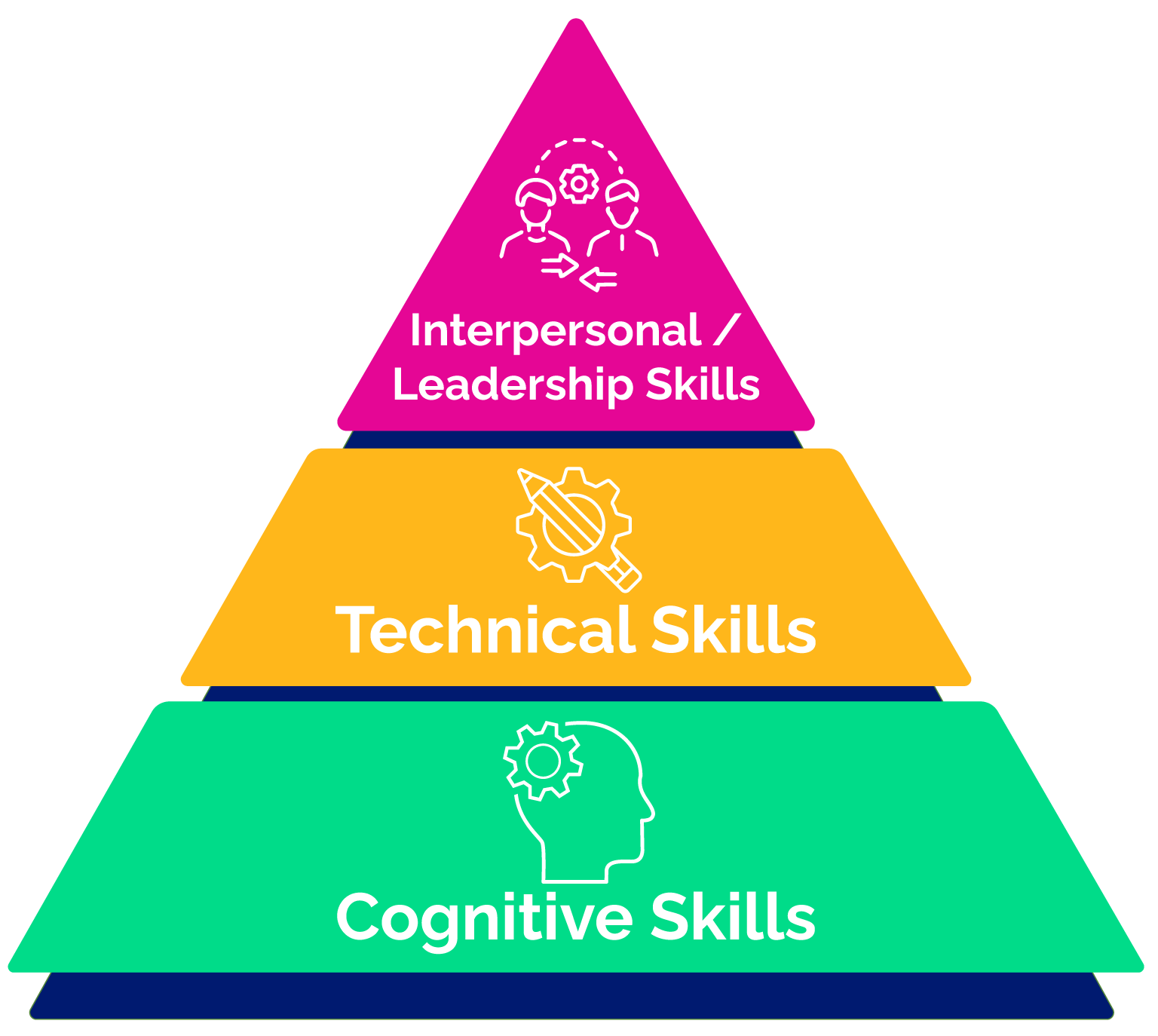
Corporate learning programs typically address several different types of skills. Understanding these categories helps organizations design balanced development programs.
Cognitive Skills
Cognitive skills support problem-solving, reasoning, and decision-making. These capabilities help employees interpret information, analyze situations, and develop solutions.
Examples include:
- Critical thinking
- Creativity
- Analytical reasoning
- Strategic planning
These skills are particularly important for leadership roles and complex problem-solving tasks.
Technical Skills
Technical skills are role-specific capabilities required to perform specialized tasks.
Examples include:
- Software development
- Data analysis
- Engineering design
- Cybersecurity
- Machine operation
Technical training programs often require hands-on practice or structured certification pathways.
Interpersonal Skills
Interpersonal skills enable effective communication and collaboration. These capabilities are essential for leadership, teamwork, and customer interactions.
Examples include:
- Communication
- Leadership
- Negotiation
- Teamwork
- Conflict resolution
Organizations increasingly recognize that strong interpersonal skills are just as important as technical expertise, particularly for managers and cross-functional teams.
What are the Benefits of Upskilling and Reskilling?
Well-designed skills development programs benefit both employees and organizations.
Benefits for Employees
Upskilling and reskilling help employees stay relevant in changing job markets while improving their long-term career prospects.
Common benefits include:
- Greater job security
- Improved career mobility
- Increased engagement with work
- Higher confidence in professional capabilities
Employees increasingly expect opportunities to grow their capabilities. Surveys show that 74% of workers want to acquire new skills through training in order to remain employable and advance professionally. Employees who see opportunities for growth within an organization are also more likely to remain committed to their employer.
Benefits for Organizations
From an organizational perspective, skills development supports several strategic outcomes. Organizations increasingly view workforce development as a business investment rather than a cost. According to the WEF Future of Jobs Report, 77% of employers expect training investments to improve productivity, while 70% say these initiatives strengthen competitiveness.
Companies that invest in workforce development often see:
- Improved productivity
- Faster adoption of new technologies
- Stronger innovation capacity
- Higher employee retention
- Reduced recruiting costs
Upskilling programs also help organizations develop internal talent pipelines for leadership and specialized roles.
Skills-Centric Training: A Modern Learning Model
Traditional training programs often focus on delivering courses. Skills-centric learning takes a different approach by aligning training with measurable competencies.
In this model, learning programs are structured around specific skills required for job roles. Training content, assessments, and learning pathways are all designed to build those capabilities.
Skills-centric learning often includes:
- Role-based learning pathways
- Personalized training recommendations
- Competency tracking
- Assessments linked to skills
This approach helps organizations measure learning outcomes more effectively because progress can be tied directly to capability development.
Learning platforms increasingly support this model by tracking skills alongside training activities, helping organizations understand which capabilities employees have developed and where gaps remain. Platforms such as ExpertusONE support this approach by combining learning pathways, competency tracking, and analytics tools that help organizations monitor skills development across teams.
How to Build an Upskilling Strategy?
Organizations typically follow several steps when developing a workforce skills strategy.
1. Identify Skills Gaps
The first step is identifying which capabilities employees currently lack. Skills gap analysis may involve performance data, manager feedback, and workforce planning.
Many organizations map required competencies for key roles and compare them with current workforce capabilities.
2. Define Learning Objectives
Once skill gaps are identified, organizations define specific learning objectives tied to those capabilities.
Clear learning objectives help ensure training programs support real business needs rather than generic development goals.
3. Build Learning Pathways
Learning pathways organize training into structured programs that guide employees through skill development.
These pathways may include:
- Digital learning modules
- Instructor-led sessions
- Mentoring programs
- Project-based learning
Modern learning platforms make it easier to deliver these structured pathways across large and distributed workforces.
4. Measure Progress and Outcomes
Effective skills programs track learning outcomes to determine whether training improves capability and performance.
Organizations often measure:
- Skill acquisition
- Training completion
- Employee performance improvements
- Workforce readiness for new initiatives
Learning analytics and reporting tools help leadership monitor these outcomes.
5. Continuously Update Skills Programs
Skills requirements evolve quickly, particularly in technology-driven industries. Successful programs regularly update learning content and competency frameworks to reflect changing workforce needs.
Continuous improvement helps ensure training remains relevant as new technologies and business priorities emerge.
Upskilling for Digital Transformation
Digital transformation initiatives often require employees to learn entirely new skills. Technologies such as artificial intelligence, cloud computing, and advanced analytics are reshaping how work is performed.
Organizations adopting these technologies must often develop capabilities in areas such as:
- Data literacy
- Digital collaboration tools
- Automation systems
- Cybersecurity awareness
- AI-assisted workflows
Upskilling programs help employees adopt these tools effectively and reduce the disruption associated with technological change.
Without structured training programs, employees may struggle to adapt to new systems, slowing digital transformation efforts.
For large enterprises, scalable learning platforms are critical to delivering digital skills training across global teams while maintaining visibility into learning progress. Platforms such as ExpertusONE allow organizations to deliver structured learning programs across employees, partners, and other extended enterprise audiences while maintaining centralized oversight.
What Tools Do Enterprises Need for Skills Development and Upskilling?
Skills development programs often fail not because organizations lack training content, but because the systems supporting those programs cannot scale. Skills evolve, roles change, certifications expire, and training programs expand across departments and geographies.
Enterprise organizations typically rely on several core tool categories to make workforce skills development repeatable, measurable, and manageable.
1. Skills Gap Analysis and Workforce Insights
Effective skills programs begin with understanding which capabilities the workforce already has and where gaps exist.
Learning teams need tools that help them analyze workforce data, training progress, and certification outcomes. These insights allow organizations to identify emerging capability gaps and plan development programs accordingly.
Analytics tools play an important role here. ExpertusONE Insights provides dashboards that help learning leaders track training progress, certification status, and workforce development trends across departments and audiences.
Instead of manually compiling training reports, learning teams can use analytics dashboards to quickly understand:
- Which skills are being developed across teams
- Where capability gaps remain
- Which programs are driving the strongest learning outcomes
These insights help organizations make more informed workforce development decisions.
2. Role-Based Learning Pathways
One of the most common reasons skills programs struggle is that training is not aligned with job roles. When learning content is not mapped to specific responsibilities, employees may receive training that is irrelevant or incomplete.
Enterprise organizations increasingly rely on role-based learning pathways to ensure training aligns with workforce needs.
Learning platforms help operationalize these programs by automatically assigning training based on job roles, departments, or workforce attributes.
Platforms such as ExpertusONE allow learning teams to build structured training paths that guide employees through skill development programs tied to their roles. As employees progress, the platform tracks learning activity and updates training requirements automatically.
This approach helps organizations avoid two common problems:
- Undertraining, where employees lack critical capabilities
- Overtraining, where employees complete unnecessary courses
3. Skills Tracking and Credential Visibility
Once employees complete training programs, organizations must be able to verify which skills individuals have developed.
This becomes especially important in industries where certifications or competencies determine whether employees can perform certain tasks.
Skills verification tools allow organizations to quickly confirm employee capabilities without relying on manual reporting.
For example, the ExpertusONE ONE-Profile Card provides a quick, centralized view of a learner’s training history, credentials, and certifications. Supervisors and managers can verify workforce capabilities at a glance, making it easier to confirm that employees have completed the training required for their roles.
In environments where workforce readiness must be validated quickly (such as field operations, healthcare, or manufacturing), having immediate visibility into skills and credentials becomes especially valuable.
4. Competency Validation and Skills Assessments
In many industries, workforce skills must be validated through real-world assessments rather than simple course completion.
For example, organizations may need to confirm that employees can:
- Operate equipment safely
- Perform clinical procedures
- Follow operational protocols
- Demonstrate technical competencies
Tools that support structured assessments help organizations capture this validation digitally.
ExpertusONE supports competency validation through capabilities such as the Observation Checklist, which allows supervisors to record hands-on assessments and skill validations directly within the learning platform.
This ensures that practical competencies are tracked alongside traditional training records.
5. Skills Analytics and Workforce Reporting
Leadership teams often need visibility into workforce capabilities at an organizational level.
For example, executives may want to understand:
- Which departments are developing new capabilities
- Where workforce skills gaps exist
- How training programs affect productivity and retention
Analytics and reporting tools help learning leaders translate training activity into workforce intelligence.
Platforms such as ExpertusONE provide dashboards that allow organizations to analyze learning data across departments, regions, and audiences. These dashboards help leaders evaluate whether workforce development initiatives are strengthening organizational capabilities.
6. Training Delivery Across Extended Enterprise Audiences
Many organizations now train audiences beyond their employees, including partners, distributors, franchisees, and contractors.
Skills development programs must therefore support multiple audiences while maintaining governance and reporting.
Learning platforms such as ExpertusONE are designed to support extended enterprise learning environments, allowing organizations to deliver skills training across diverse audiences while maintaining centralized oversight.
This ensures training programs remain consistent even as organizations scale across regions and partner ecosystems.
Why These Tools Matter?
When these capabilities work together, organizations can move beyond isolated training programs and build structured workforce development systems.
Instead of simply delivering courses, learning teams can:
- Identify capability gaps
- Assign structured learning pathways
- Validate skills through assessments
- Track workforce capabilities through analytics
This shift helps organizations transform training programs into strategic workforce development initiatives.
Where ExpertusONE Fits: Skills Development Built for Enterprise Complexity
Enterprise learning environments are rarely simple. Training requirements vary by role, region, and business unit, and organizations often need to support multiple audiences simultaneously.
ExpertusONE is designed for organizations that need to manage this level of complexity.
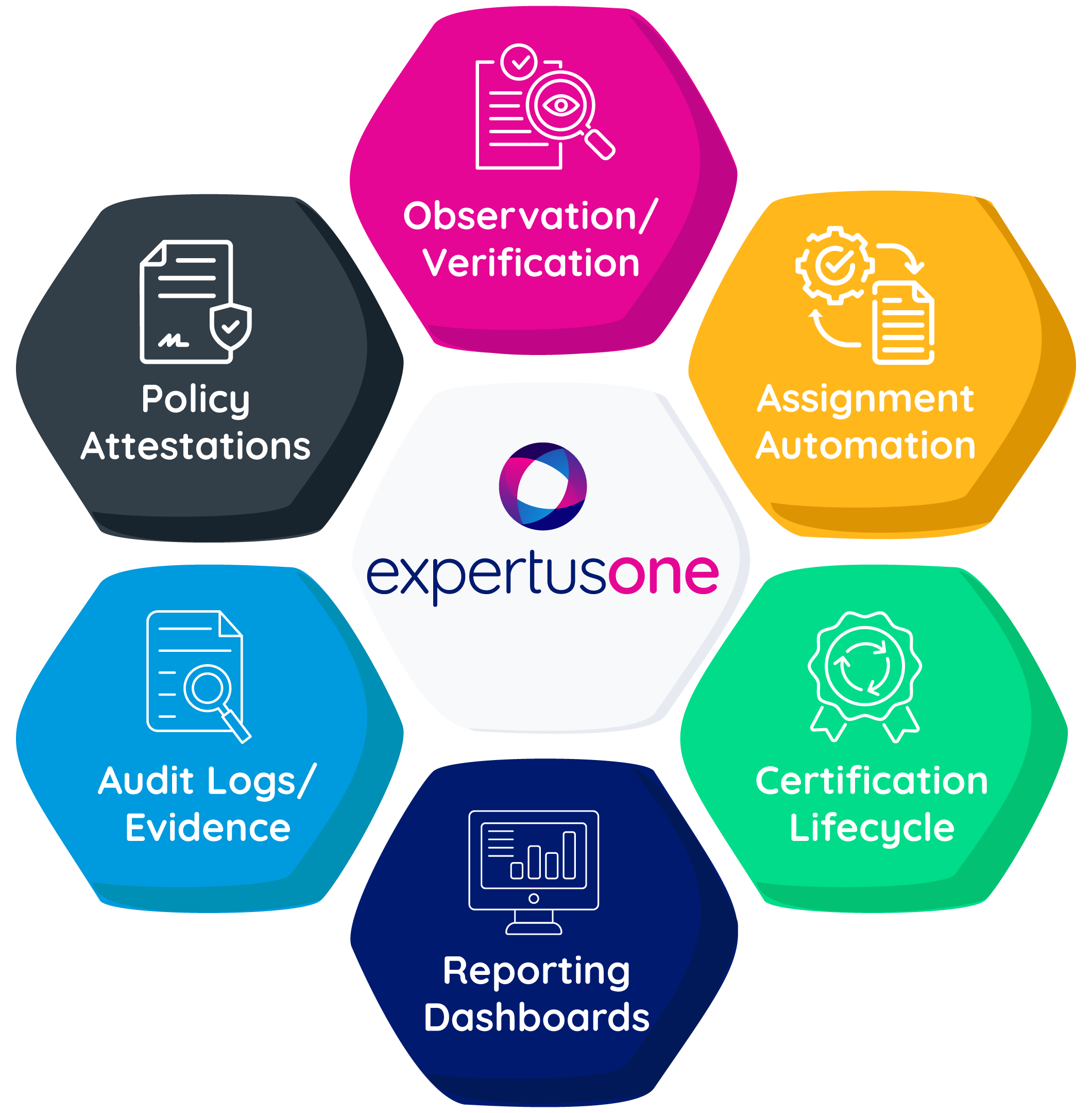
In practical terms, organizations often adopt platforms like ExpertusONE when they need to:
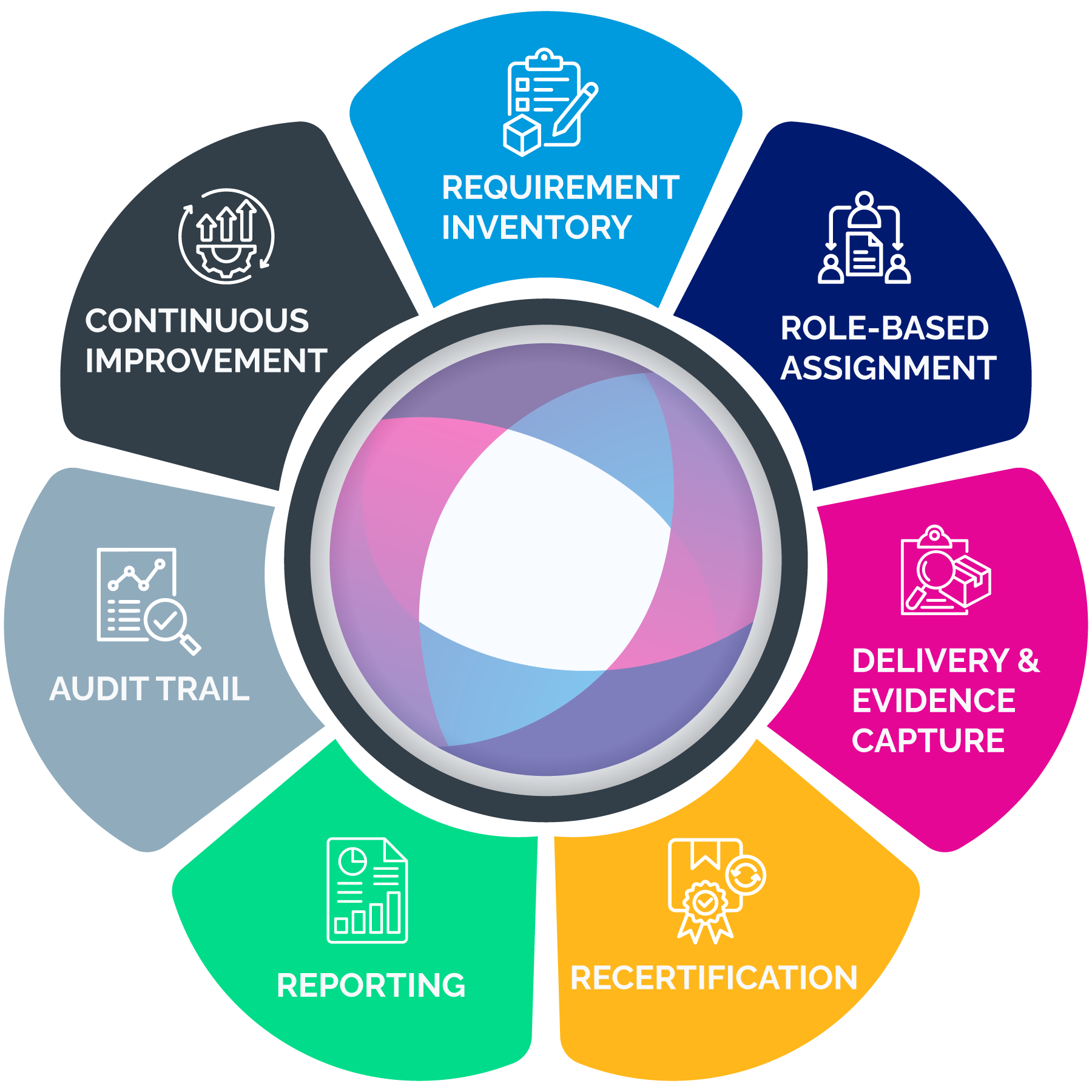
- Deliver role-based training programs across global teams
- Track workforce skills and certifications
- Validate competencies through structured assessments
- Analyze workforce capability through learning analytics
- Support extended enterprise learning environments
These capabilities allow organizations to scale skills development programs without increasing administrative complexity.
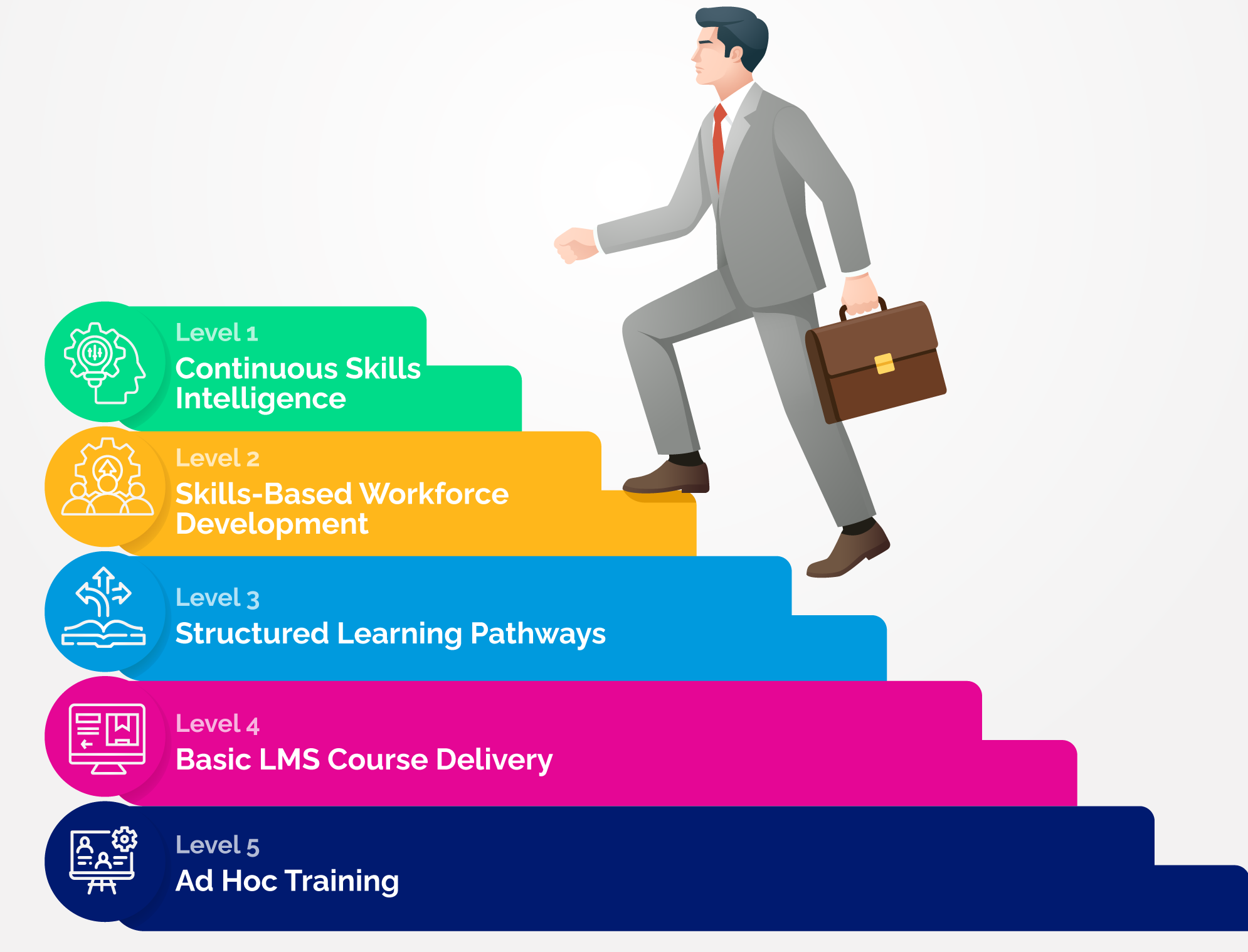
For teams evaluating platform options, further reading is available here:
Key Takeaways
Skills development helps organizations build adaptable workforces capable of responding to change.
Upskilling strengthens capabilities used in current roles.
Reskilling prepares employees for new roles as industries evolve.
Skills-centric learning aligns training programs with measurable competencies.
Learning platforms enable organizations to deliver scalable skills development programs across large and distributed workforces.
FAQs
Upskilling is the process of helping employees develop additional skills that improve their performance in their current roles. This often includes learning new technologies, advanced technical capabilities, or leadership skills.
Skills development helps organizations close capability gaps, support digital transformation, improve productivity, and retain employees. Continuous learning programs also help employees adapt to evolving technologies and business needs.
Organizations typically conduct skills gap analysis by comparing the competencies required for key roles with current workforce capabilities. This process often involves performance data, manager feedback, and workforce planning tools.
Enterprise learning platforms support skills development by delivering training, managing learning pathways, tracking certifications, and providing analytics that help organizations measure workforce capability growth.
About the Author:
Ramesh Ramani is the co-founder, CEO, and President of ExpertusONE, where he sets the company’s strategic direction and guides the development of an enterprise learning platform used by large, complex organizations. A seasoned software entrepreneur, he has spent more than two decades building and scaling technology companies, with a focus on bringing powerful yet practical innovations to the learning and talent development market. Contact Ramesh.
Summary
Upskilling and reskilling help organizations close capability gaps, support digital transformation, and prepare employees for new roles as technology and business needs evolve. For large companies, skills development is not just a training initiative. It is a strategic system for identifying skill gaps, building workforce capabilities, and adapting to change.
This guide explains how modern organizations approach skills development, including how to define upskilling and reskilling, identify critical skills, design effective training programs, and measure outcomes. It also explores the role learning platforms play in supporting scalable skills programs across global teams. For organizations facing rapid technological change, the ability to continuously develop skills is becoming a core business capability.
Key Terms:
- Skills Development
- Upskilling
- Reskilling
- Skills Gap Analysis
- Competency-Based Learning
- Skills-Centric Training
- Workforce Transformation
- Digital Skills
What is Skills Development?
Skills development is the structured process of identifying capability gaps and helping employees build the knowledge and competencies needed to perform effectively in their roles.
In modern organizations, skills development serves several purposes:
- Improving workforce capability
- Preparing employees for evolving job requirements
- Enabling innovation and digital transformation
- Supporting long-term career development
Skills development programs typically involve several stages:
- Identifying skill gaps across teams or roles
- Designing learning pathways to address those gaps
- Delivering training through digital learning platforms
- Measuring improvements in capability and performance
Large enterprises often approach this through skills frameworks or competency models, which map required capabilities to job roles and career paths. This structure helps organizations connect learning programs directly to workforce needs rather than delivering generic training.
Skills development also increasingly extends beyond employees. Many organizations provide training to partners, contractors, franchisees, and other extended enterprise audiences. Supporting these diverse audiences requires learning systems that can manage multiple training programs while maintaining governance and reporting.
What is Upskilling?
Upskilling refers to the process of helping employees improve or expand the skills they already use in their current roles.
Rather than preparing workers for entirely new jobs, upskilling focuses on strengthening existing capabilities so employees can work more effectively, adopt new technologies, or take on more advanced responsibilities.
Examples of upskilling include:
- Training employees to use new digital tools
- Teaching advanced technical skills
- Helping managers develop leadership capabilities
- Improving data literacy or analytical skills
Upskilling initiatives often emerge when organizations adopt new technologies or change business processes. For example, the introduction of artificial intelligence tools, automation platforms, or advanced analytics systems often requires employees to learn new technical and analytical skills.
Many organizations now treat upskilling as an ongoing process rather than a one-time initiative. Research shows how widespread this need has become. According to McKinsey, 87% of companies report that they either currently face skill gaps or expect them within the next few years. Continuous learning programs help employees adapt to evolving roles and support long-term workforce agility.
Learning platforms play an important role in enabling these programs by delivering training, tracking progress, and connecting learning content to specific skills or competencies.
What is Reskilling?
Reskilling focuses on preparing employees for new roles or responsibilities when their existing skills are no longer sufficient.
Organizations often pursue reskilling when:
- Technologies replace certain tasks
- Business priorities change
- Employees transition into different roles
- Industries undergo major shifts
For example, a company introducing automation may reskill administrative employees to work in data management, analytics, or customer support roles.
Reskilling initiatives are particularly valuable during large-scale organizational changes because they allow companies to retain institutional knowledge while helping employees transition into new positions. As technology adoption accelerates, many roles are evolving rapidly. The World Economic Forum’s Future of Jobs Report estimates that 39% of workers’ core skills will change by 2030, highlighting the growing need for structured reskilling programs across industries.
Successful reskilling programs typically include:
- Clear role transition pathways
- Structured learning programs
- Mentoring or coaching
- Opportunities to apply new skills in real projects
Organizations that invest in reskilling can reduce hiring costs while improving employee retention and internal mobility.
Extended enterprise blind spots
Dealers, franchisees, contractors, and partners often represent compliance exposure, yet fall outside core HR systems and standard reporting.
Upskilling vs. Reskilling
Although the terms are often used together, they describe different approaches to workforce development.
| Upskilling | Reskilling |
|---|---|
| Improves skills used in a current role | Prepares employees for a different role |
| Builds deeper expertise | Builds new capabilities |
| Supports career growth within a job path | Supports career transitions |
| Often technology-driven | Often role-change driven |
Both strategies are important for modern organizations. Upskilling helps employees stay effective as technology evolves, while reskilling allows companies to adapt their workforce as business priorities shift.
Together, they form the foundation of a broader skills development strategy.
Why Does Skills Development Matter Now?
The pace of technological and economic change is reshaping how organizations think about workforce capabilities. Automation, artificial intelligence, and digital transformation are altering the skills required across nearly every industry.
The need for reskilling is growing as technology reshapes job roles. The World Economic Forum estimates that 50% of employees will require reskilling as new technologies are adopted across industries.
As a result, companies are increasingly treating skills development as a strategic priority rather than simply a training activity.
Research from global workforce studies consistently shows that many organizations face significant skills gaps. These gaps can slow innovation, reduce productivity, and make it harder to adopt new technologies.
Skills development programs help organizations address these challenges by:
- Improving workforce adaptability
- Enabling digital transformation initiatives
- Strengthening employee engagement
- Supporting long-term competitiveness
For leaders responsible for workforce development, the challenge is not simply delivering training. It is creating systems that allow employees to continuously build new capabilities as roles evolve.
This is why many enterprises are shifting toward skills-based learning models, where training programs are aligned with specific competencies and career pathways rather than isolated courses.
What are the Common Challenges in Skills Development?
Despite growing investment in workforce training, many organizations struggle to build effective skills development programs. The challenge is rarely the availability of training content. More often, it lies in coordinating learning initiatives across complex organizations.
Some of the most common challenges include:
Identifying Skills Gaps
Many organizations lack clear visibility into the capabilities of their workforce. Without reliable data about employee skills, it becomes difficult to determine which capabilities need to be developed or where training programs should focus.
Skills gap analysis often requires combining data from performance reviews, workforce planning initiatives, and learning systems to create a clear picture of current capabilities.
Aligning Training With Job Roles
Training programs are sometimes delivered as generic course libraries rather than structured development pathways tied to specific roles.
When training is not aligned with job responsibilities, employees may complete courses that do not directly support their day-to-day work. This reduces the impact of learning initiatives and makes it harder to measure outcomes.
Role-based learning pathways help address this problem by aligning training programs with the competencies required for specific roles.
Measuring Skills Development
Traditional training metrics (such as course completion rates) do not always reflect whether employees have actually developed new capabilities.
Organizations increasingly need ways to measure skill acquisition, competency development, and workforce readiness. This requires learning systems that track skills alongside training activities and provide analytics on workforce capabilities.
Scaling Programs Across Large Organizations
Large enterprises often need to deliver training across multiple regions, departments, and audiences. This complexity can make it difficult to maintain consistent training standards while still adapting programs to local needs.
Learning platforms that support role-based assignments, structured learning pathways, and centralized reporting help organizations scale skills development initiatives while maintaining governance and visibility.
Types of Skills Training
Corporate learning programs typically address several different types of skills. Understanding these categories helps organizations design balanced development programs.
Cognitive Skills
Cognitive skills support problem-solving, reasoning, and decision-making. These capabilities help employees interpret information, analyze situations, and develop solutions.
Examples include:
- Critical thinking
- Creativity
- Analytical reasoning
- Strategic planning
These skills are particularly important for leadership roles and complex problem-solving tasks.
Technical Skills
Technical skills are role-specific capabilities required to perform specialized tasks.
Examples include:
- Software development
- Data analysis
- Engineering design
- Cybersecurity
- Machine operation
Technical training programs often require hands-on practice or structured certification pathways.
Interpersonal Skills
Interpersonal skills enable effective communication and collaboration. These capabilities are essential for leadership, teamwork, and customer interactions.
Examples include:
- Communication
- Leadership
- Negotiation
- Teamwork
- Conflict resolution
Organizations increasingly recognize that strong interpersonal skills are just as important as technical expertise, particularly for managers and cross-functional teams.
What are the Benefits of Upskilling and Reskilling?
Well-designed skills development programs benefit both employees and organizations.
Benefits for Employees
Upskilling and reskilling help employees stay relevant in changing job markets while improving their long-term career prospects.
Common benefits include:
- Greater job security
- Improved career mobility
- Increased engagement with work
- Higher confidence in professional capabilities
Employees increasingly expect opportunities to grow their capabilities. Surveys show that 74% of workers want to acquire new skills through training in order to remain employable and advance professionally. Employees who see opportunities for growth within an organization are also more likely to remain committed to their employer.
Benefits for Organizations
From an organizational perspective, skills development supports several strategic outcomes. Organizations increasingly view workforce development as a business investment rather than a cost. According to the WEF Future of Jobs Report, 77% of employers expect training investments to improve productivity, while 70% say these initiatives strengthen competitiveness.
Companies that invest in workforce development often see:
- Improved productivity
- Faster adoption of new technologies
- Stronger innovation capacity
- Higher employee retention
- Reduced recruiting costs
Upskilling programs also help organizations develop internal talent pipelines for leadership and specialized roles.
Skills-Centric Training: A Modern Learning Model
Traditional training programs often focus on delivering courses. Skills-centric learning takes a different approach by aligning training with measurable competencies.
In this model, learning programs are structured around specific skills required for job roles. Training content, assessments, and learning pathways are all designed to build those capabilities.
Skills-centric learning often includes:
- Role-based learning pathways
- Personalized training recommendations
- Competency tracking
- Assessments linked to skills
This approach helps organizations measure learning outcomes more effectively because progress can be tied directly to capability development.
Learning platforms increasingly support this model by tracking skills alongside training activities, helping organizations understand which capabilities employees have developed and where gaps remain. Platforms such as ExpertusONE support this approach by combining learning pathways, competency tracking, and analytics tools that help organizations monitor skills development across teams.
How to Build an Upskilling Strategy?
Organizations typically follow several steps when developing a workforce skills strategy.
1. Identify Skills Gaps
The first step is identifying which capabilities employees currently lack. Skills gap analysis may involve performance data, manager feedback, and workforce planning.
Many organizations map required competencies for key roles and compare them with current workforce capabilities.
2. Define Learning Objectives
Once skill gaps are identified, organizations define specific learning objectives tied to those capabilities.
Clear learning objectives help ensure training programs support real business needs rather than generic development goals.
3. Build Learning Pathways
Learning pathways organize training into structured programs that guide employees through skill development.
These pathways may include:
- Digital learning modules
- Instructor-led sessions
- Mentoring programs
- Project-based learning
Modern learning platforms make it easier to deliver these structured pathways across large and distributed workforces.
4. Measure Progress and Outcomes
Effective skills programs track learning outcomes to determine whether training improves capability and performance.
Organizations often measure:
- Skill acquisition
- Training completion
- Employee performance improvements
- Workforce readiness for new initiatives
Learning analytics and reporting tools help leadership monitor these outcomes.
5. Continuously Update Skills Programs
Skills requirements evolve quickly, particularly in technology-driven industries. Successful programs regularly update learning content and competency frameworks to reflect changing workforce needs.
Continuous improvement helps ensure training remains relevant as new technologies and business priorities emerge.
Upskilling for Digital Transformation
Digital transformation initiatives often require employees to learn entirely new skills. Technologies such as artificial intelligence, cloud computing, and advanced analytics are reshaping how work is performed.
Organizations adopting these technologies must often develop capabilities in areas such as:
- Data literacy
- Digital collaboration tools
- Automation systems
- Cybersecurity awareness
- AI-assisted workflows
Upskilling programs help employees adopt these tools effectively and reduce the disruption associated with technological change.
Without structured training programs, employees may struggle to adapt to new systems, slowing digital transformation efforts.
For large enterprises, scalable learning platforms are critical to delivering digital skills training across global teams while maintaining visibility into learning progress. Platforms such as ExpertusONE allow organizations to deliver structured learning programs across employees, partners, and other extended enterprise audiences while maintaining centralized oversight.
What Tools Do Enterprises Need for Skills Development and Upskilling?
Skills development programs often fail not because organizations lack training content, but because the systems supporting those programs cannot scale. Skills evolve, roles change, certifications expire, and training programs expand across departments and geographies.
Enterprise organizations typically rely on several core tool categories to make workforce skills development repeatable, measurable, and manageable.
1. Skills Gap Analysis and Workforce Insights
Effective skills programs begin with understanding which capabilities the workforce already has and where gaps exist.
Learning teams need tools that help them analyze workforce data, training progress, and certification outcomes. These insights allow organizations to identify emerging capability gaps and plan development programs accordingly.
Analytics tools play an important role here. ExpertusONE Insights provides dashboards that help learning leaders track training progress, certification status, and workforce development trends across departments and audiences.
Instead of manually compiling training reports, learning teams can use analytics dashboards to quickly understand:
- Which skills are being developed across teams
- Where capability gaps remain
- Which programs are driving the strongest learning outcomes
These insights help organizations make more informed workforce development decisions.
2. Role-Based Learning Pathways
One of the most common reasons skills programs struggle is that training is not aligned with job roles. When learning content is not mapped to specific responsibilities, employees may receive training that is irrelevant or incomplete.
Enterprise organizations increasingly rely on role-based learning pathways to ensure training aligns with workforce needs.
Learning platforms help operationalize these programs by automatically assigning training based on job roles, departments, or workforce attributes.
Platforms such as ExpertusONE allow learning teams to build structured training paths that guide employees through skill development programs tied to their roles. As employees progress, the platform tracks learning activity and updates training requirements automatically.
This approach helps organizations avoid two common problems:
- Undertraining, where employees lack critical capabilities
- Overtraining, where employees complete unnecessary courses
3. Skills Tracking and Credential Visibility
Once employees complete training programs, organizations must be able to verify which skills individuals have developed.
This becomes especially important in industries where certifications or competencies determine whether employees can perform certain tasks.
Skills verification tools allow organizations to quickly confirm employee capabilities without relying on manual reporting.
For example, the ExpertusONE ONE-Profile Card provides a quick, centralized view of a learner’s training history, credentials, and certifications. Supervisors and managers can verify workforce capabilities at a glance, making it easier to confirm that employees have completed the training required for their roles.
In environments where workforce readiness must be validated quickly (such as field operations, healthcare, or manufacturing), having immediate visibility into skills and credentials becomes especially valuable.
4. Competency Validation and Skills Assessments
In many industries, workforce skills must be validated through real-world assessments rather than simple course completion.
For example, organizations may need to confirm that employees can:
- Operate equipment safely
- Perform clinical procedures
- Follow operational protocols
- Demonstrate technical competencies
Tools that support structured assessments help organizations capture this validation digitally.
ExpertusONE supports competency validation through capabilities such as the Observation Checklist, which allows supervisors to record hands-on assessments and skill validations directly within the learning platform.
This ensures that practical competencies are tracked alongside traditional training records.
5. Skills Analytics and Workforce Reporting
Leadership teams often need visibility into workforce capabilities at an organizational level.
For example, executives may want to understand:
- Which departments are developing new capabilities
- Where workforce skills gaps exist
- How training programs affect productivity and retention
Analytics and reporting tools help learning leaders translate training activity into workforce intelligence.
Platforms such as ExpertusONE provide dashboards that allow organizations to analyze learning data across departments, regions, and audiences. These dashboards help leaders evaluate whether workforce development initiatives are strengthening organizational capabilities.
6. Training Delivery Across Extended Enterprise Audiences
Many organizations now train audiences beyond their employees, including partners, distributors, franchisees, and contractors.
Skills development programs must therefore support multiple audiences while maintaining governance and reporting.
Learning platforms such as ExpertusONE are designed to support extended enterprise learning environments, allowing organizations to deliver skills training across diverse audiences while maintaining centralized oversight.
This ensures training programs remain consistent even as organizations scale across regions and partner ecosystems.
Why These Tools Matter?
When these capabilities work together, organizations can move beyond isolated training programs and build structured workforce development systems.
Instead of simply delivering courses, learning teams can:
- Identify capability gaps
- Assign structured learning pathways
- Validate skills through assessments
- Track workforce capabilities through analytics
This shift helps organizations transform training programs into strategic workforce development initiatives.
Where ExpertusONE Fits: Skills Development Built for Enterprise Complexity
Enterprise learning environments are rarely simple. Training requirements vary by role, region, and business unit, and organizations often need to support multiple audiences simultaneously.
ExpertusONE is designed for organizations that need to manage this level of complexity.
In practical terms, organizations often adopt platforms like ExpertusONE when they need to:
- Deliver role-based training programs across global teams
- Track workforce skills and certifications
- Validate competencies through structured assessments
- Analyze workforce capability through learning analytics
- Support extended enterprise learning environments
These capabilities allow organizations to scale skills development programs without increasing administrative complexity.
For teams evaluating platform options, further reading is available here:
Key Takeaways
Skills development helps organizations build adaptable workforces capable of responding to change.
Upskilling strengthens capabilities used in current roles.
Reskilling prepares employees for new roles as industries evolve.
Skills-centric learning aligns training programs with measurable competencies.
Learning platforms enable organizations to deliver scalable skills development programs across large and distributed workforces.
FAQs
Upskilling is the process of helping employees develop additional skills that improve their performance in their current roles. This often includes learning new technologies, advanced technical capabilities, or leadership skills.
Skills development helps organizations close capability gaps, support digital transformation, improve productivity, and retain employees. Continuous learning programs also help employees adapt to evolving technologies and business needs.
Organizations typically conduct skills gap analysis by comparing the competencies required for key roles with current workforce capabilities. This process often involves performance data, manager feedback, and workforce planning tools.
Enterprise learning platforms support skills development by delivering training, managing learning pathways, tracking certifications, and providing analytics that help organizations measure workforce capability growth.
About the Author:
Ramesh Ramani is the co-founder, CEO, and President of ExpertusONE, where he sets the company’s strategic direction and guides the development of an enterprise learning platform used by large, complex organizations. A seasoned software entrepreneur, he has spent more than two decades building and scaling technology companies, with a focus on bringing powerful yet practical innovations to the learning and talent development market. Contact Ramesh.


