
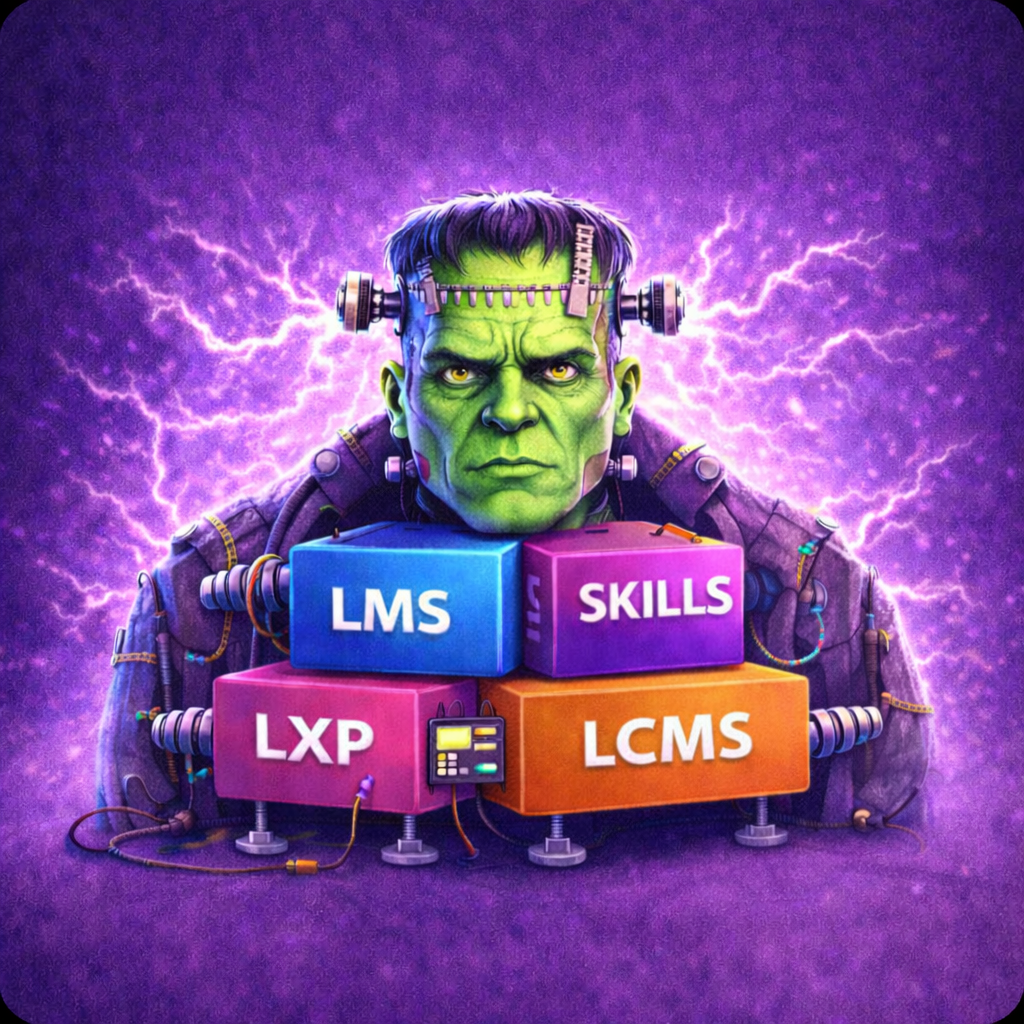
Is Your Learning Tech Stack
Becoming a Frankenstack?
How to Build a Business Case That Secures LMS Funding?
(MEET WITH OUR LEARNING ADVISOR, GREG BASHAR)
Summary:
If your learning environment feels stitched together across multiple systems, you are not alone.
Many enterprise teams are running a growing combination of LMS, LXP, skills tools, content providers, and partner platforms. Over time, thoughtful additions can turn into a fragmented learning tech stack that is harder to manage, measure, and defend during budget reviews.
This guide outlines how to build a structured business case that earns executive approval and prevents your stack from becoming more complex next year than it is today.
If you clicked here, your learning tech stack may feel familiar.
- An LMS
- An LXP
- A skills platform
- Content providers
- Partner or external training systems
- Reporting stitched across tools
Modernization requires more than frustration. It requires structure.
Here is how to build a business case that wins.
1. What Does Your Current Learning Tech Stack Actually Look Like?
Before proposing a change, map what exists today.
Document:
- All learning systems in use
- License and services costs
- Integration points
- Admin effort required
- Reporting and compliance risk
- Renewal timelines
Many organizations underestimate the real cost of tech stack sprawl until everything is documented in one place.
This step creates clarity for IT, finance, and executive leadership.
Takeaway:
You cannot justify consolidation if you have not quantified complexity.

2. Who Needs to Be Aligned Before You Build the Business Case?
A strong LMS business case is cross-functional.
Engage early:
- Learning leadership
- IT and security
- HR or talent teams
- Compliance, if regulated
- Finance or procurement
Involving stakeholders early reduces friction during budget review and strengthens financial credibility.
Takeaway:
Executive approval is rarely blocked by a learning strategy. It is blocked by misalignment.
3. How Do You Translate Stack Complexity Into Business Impact?
Executives do not approve platforms.
They approve outcomes.
Frame your case around:
- Reduced operational complexity
- Lower total cost of ownership
- Fewer vendors and integrations
- Improved reporting and governance
- Scalability across employees, partners, and customers
If your current environment requires constant stitching to support growth, quantify it.
Time, cost, and risk are persuasive. Technical frustration is not.
Takeaway:
Move the conversation from features to financial and operational impact.
4. What Should Your Future-State Architecture Include?
Your business case should clearly define:
- What consolidates?
- What is eliminated?
- What improves operationally?
- What improves financially?
- How is future sprawl prevented?
A modern enterprise learning platform should unify LMS, LXP, skills, and extended enterprise training within a governed, scalable environment.
Architecture decisions made today determine whether your stack becomes simpler or more complex over the next five years. That part matters more than people think.
Takeaway:
Modernization is not about adding tools. It is about simplifying architecture.
When Is the Right Time to Act?
Organizations that begin planning before renewal cycles maintain leverage.
Those who wait often extend the complexity for another contract term.
A typical planning window runs 8 to 12 weeks for mapping, evaluation, and alignment.
Waiting until renewal discussions start usually limits options.
Why Do Some LMS Business Cases Get Funded While Others Stall?
Business cases succeed when they demonstrate:
- Financial discipline
- Operational clarity
- Technical sustainability
- Long-term scalability
Without that structure, even valid modernization efforts lose momentum.
The issue is rarely ambition. It is architecture.
(MEET WITH OUR LEARNING ADVISOR, GREG BASHAR)
Key Takeaways
If your stack feels harder to explain each year, that is usually a signal.


