
BLOG
Training Multiple Audiences Doesn’t
Have to Get Messy. Here’s How to Fix It.
How to support teams, regions, partners, and customers in one platform without duplication, confusion, or admin overload.
Author: Ramesh Ramani
BLOG
Training Multiple Audiences Doesn’t Have to Get Messy. Here’s How to Fix It.
How to support teams, regions, partners, and customers in one platform without duplication, confusion, or admin overload.
Author: Ramesh Ramani
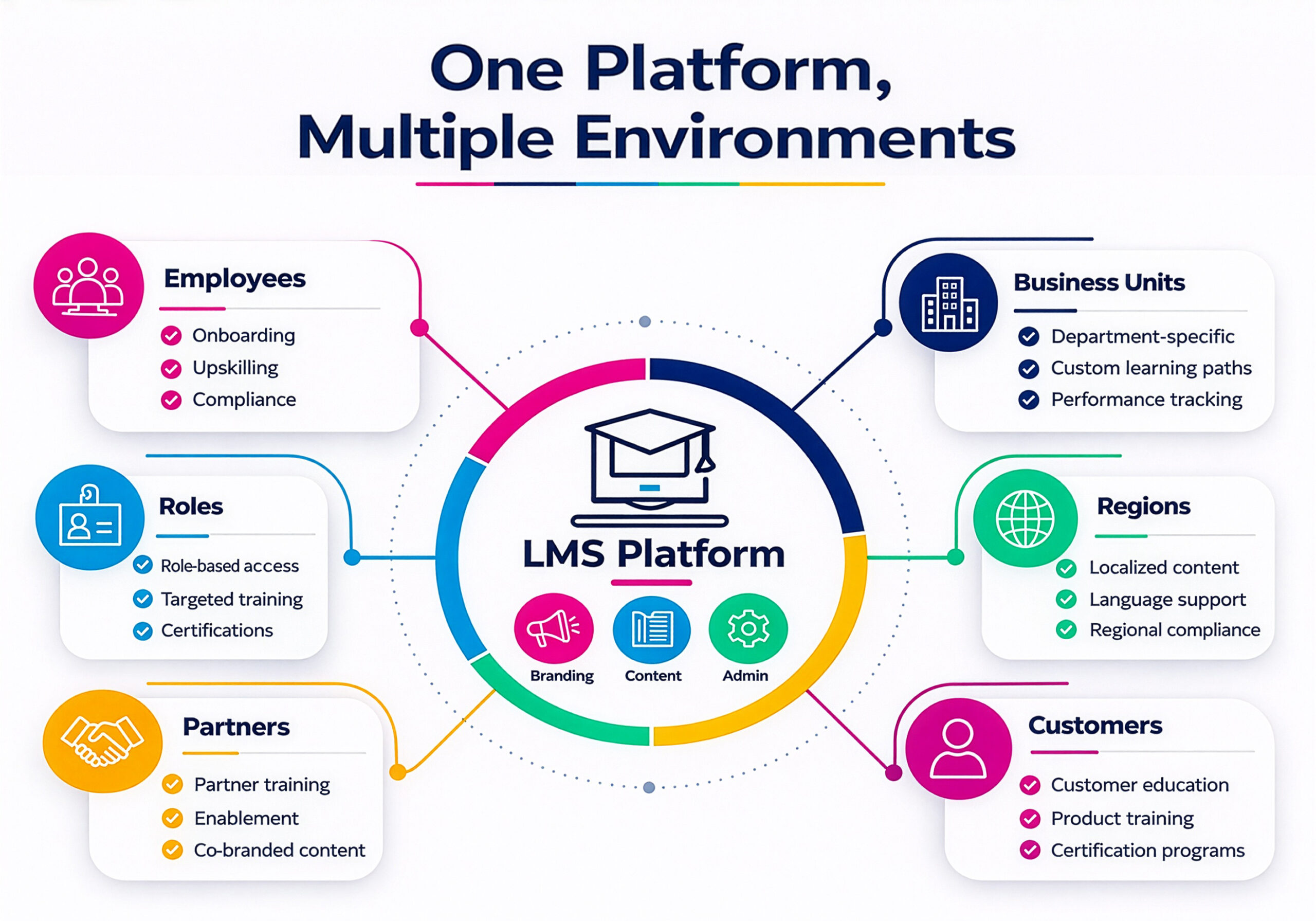
Most learning programs start simple, but they rarely stay that way. As training expands across business units, regions, roles, and external audiences, training multiple audiences becomes increasingly complex. That often leads to duplicated content, manual workarounds, inconsistent experiences, and more admin strain. A multi-tenant approach helps by supporting multiple distinct learning environments within one learning platform, while preserving both centralized oversight and local flexibility.
Why does training multiple audiences get more complex over time?
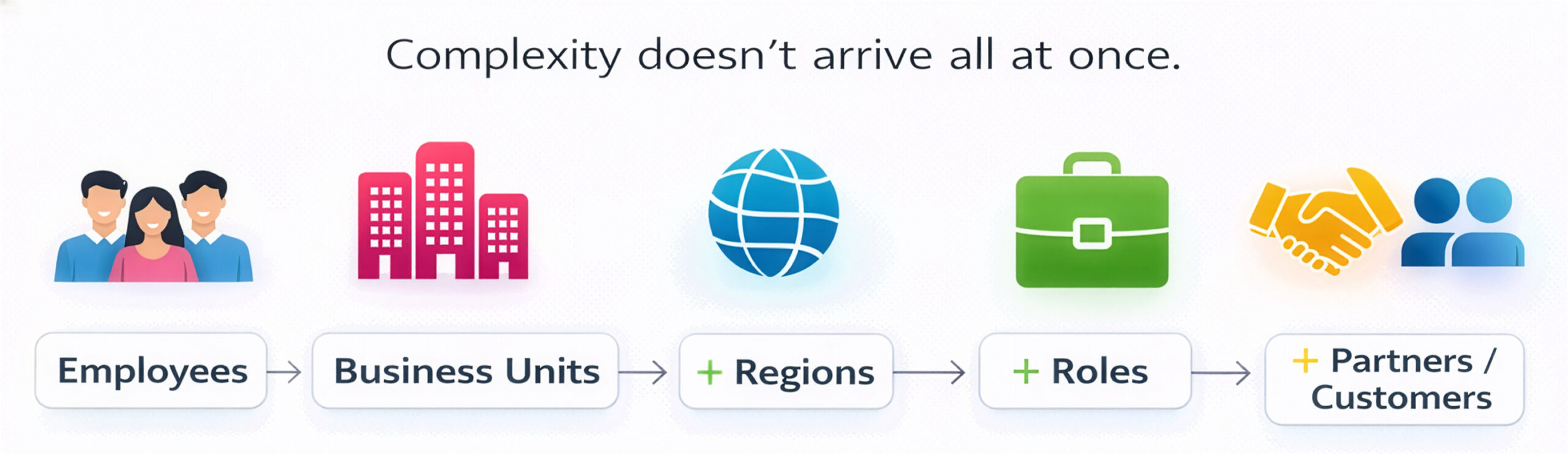
Most learning programs start with employees. The initial focus is clear. Onboarding, compliance training, and a handful of development programs. Everything fits into a single structure, and the system feels easy to manage.
Then the organization begins to evolve. A new business unit wants its own training programs. A regional team asks for localized content. Another group wants more control over how their learning is managed. These are normal, reasonable requests, and at first, they are relatively easy to accommodate.
Over time, those requests start to stack. Regions want their own branding and learner experience. Business units want more independence and control. Certain roles require tailored learning paths and reporting. What used to be one structured environment begins to stretch in different directions.
Only after that does the next layer appear. Partners need training. Customers need onboarding. Now the challenge is not just internal variation. It is managing entirely different audiences with different expectations and different goals.
What started as one learning program is now many.
Where does it start to break down?
The breaking point rarely looks dramatic. It looks like a workaround.
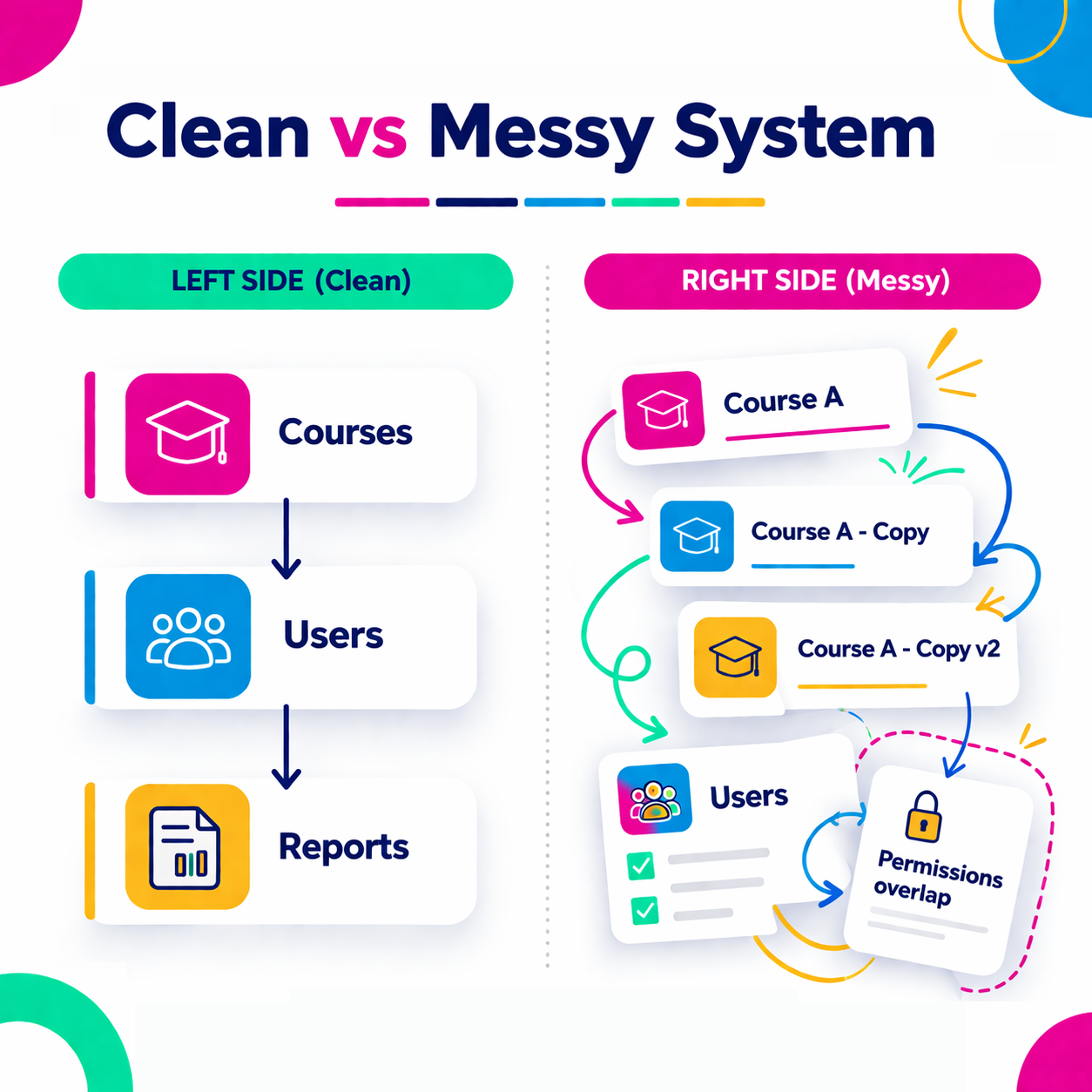
Content gets copied and slightly modified for different groups. Permissions become harder to manage and easier to misconfigure. Reporting becomes fragmented, making it difficult to get a clear view across the organization.
The central team spends more time managing exceptions than improving the learning experience. Local teams feel constrained because the system does not reflect how they actually operate. What used to be straightforward now requires coordination, negotiation, and manual effort.
None of this happens because the system failed. It happens because the scope has changed, and the structure no longer matches the reality of the program.
What actually helps as complexity grows?
At some point, the question shifts from “how do we organize this?” to “how do we support multiple learning environments without creating chaos?”
This is where the idea of multi-tenancy becomes relevant, even if teams do not use that term.
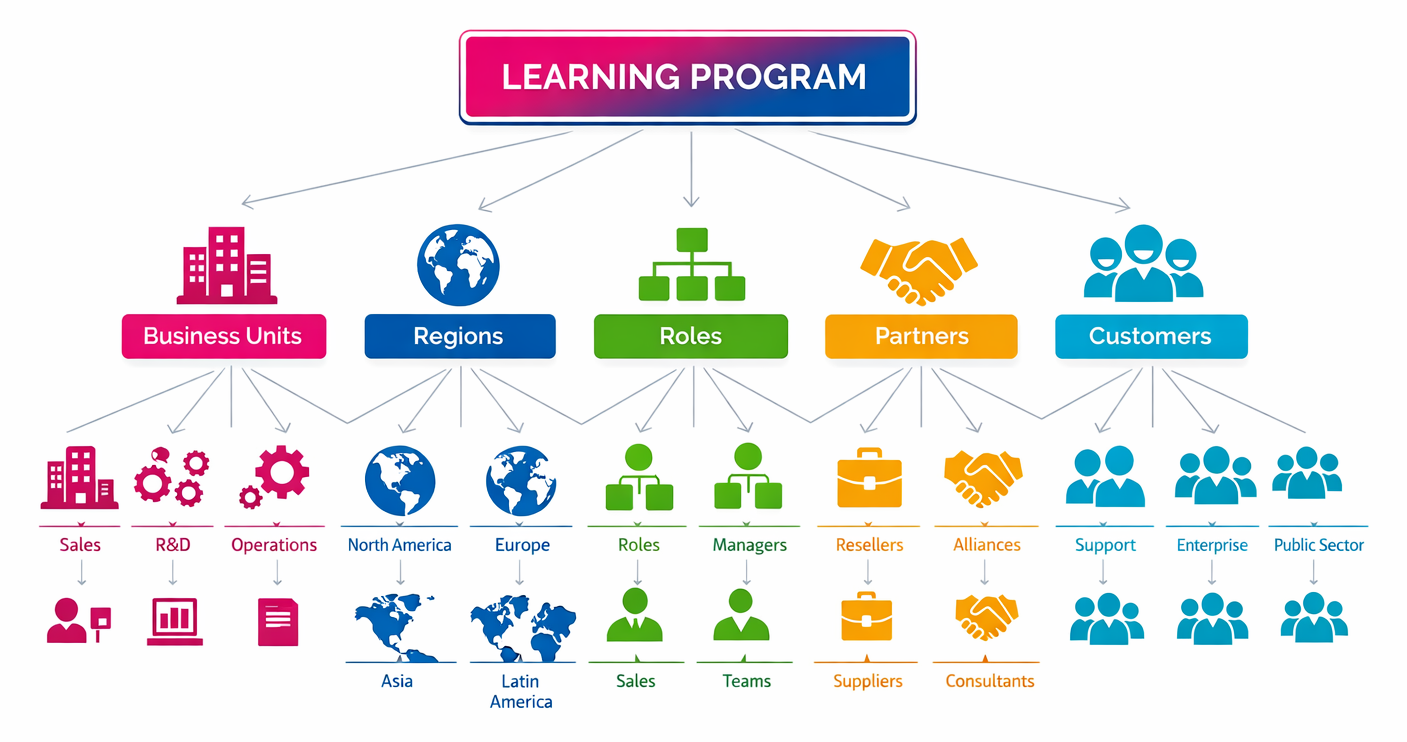
In practical terms, it means supporting different audiences in ways that feel intentionally designed for them. Different course catalogs. Different branding. Different permissions. Different administrative ownership. Not layered on top of each other, but structured in a way that keeps each environment clear and manageable.
The value is not just separation. It is reducing friction. Fewer duplicated courses. Fewer workarounds. Less manual effort to maintain consistency across groups.
This is especially important when extending learning to:
- partners → https://expertusone.com/solutions/expertusone-partner-training/
- customers → https://expertusone.com/solutions/expertusone-customer-enablement/
- sales enablement → https://expertusone.com/solutions/expertusone-sales-team-enablement/
Why is balancing control and flexibility so difficult?
As learning programs expand, a new tension appears.
Organizations still need centralized oversight. They need consistent reporting, governance, and visibility across the entire program. At the same time, individual teams need the flexibility to manage their own audiences, content, and operations without relying on a central group for every change.
Most systems that do have multi-tenant capabilities lean too far in one direction. They either centralize everything, which slows teams down, or decentralize too much, which creates inconsistency and loss of control. This becomes even more important in global environments.
What should you look for as your learning program evolves?
The question is not whether your learning program will become more complex. It is how your platform handles that complexity when it does.
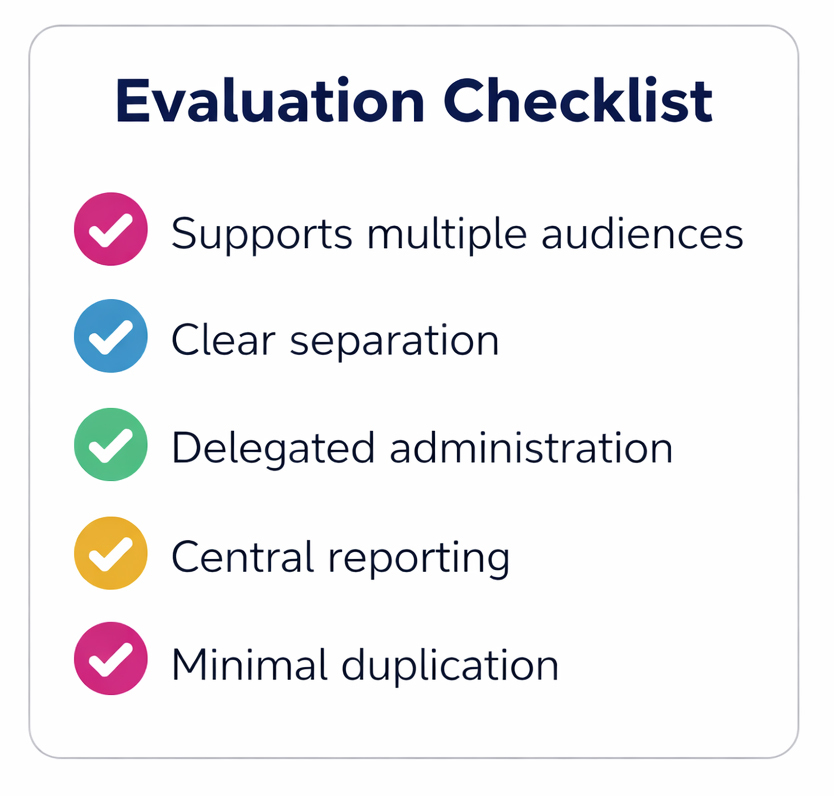
Can it support multiple audiences without forcing duplication? Can teams manage their own areas without creating risk? Can you maintain visibility across all programs without stitching together reports manually?
These are the questions that matter as learning expands.
- This is where a single, connected platform matters
- And where integrations become critical
Platforms built for more complex learning environments tend to approach this differently. For example, ExpertusONE has distinct learning environments for different audiences while giving central administrators oversight across the platform and allowing local teams to run their own operations.
A different way to think about it
As learning programs grow, the goal should not be to keep patching the original structure. The better approach is to put the right foundation in place before complexity becomes unmanageable.
That means choosing a platform that can support distinct learning environments without duplication, disconnected experiences, or constant administrative effort. It also means ensuring central teams maintain visibility while local teams have the flexibility to manage what belongs to them.
In practice, solving this challenge starts with asking a better question. Not “Can our LMS handle one more request?” but “Can it support the way our learning program is actually evolving?”
The organizations that handle this well are the ones that plan for complexity early and choose a structure that grows with them.
Key Takeaways
Complexity starts internally before expanding outward
Systems degrade through workarounds, not failure
Structure matters more than features
Control + flexibility is critical
FAQs
A multi-tenant LMS allows one platform to support multiple distinct learning environments for different audiences. That could mean separate experiences for employees, business units, regions, partners, or customers, all within the same system. Each group can have its own branding, content, permissions, and administrators, while the organization still maintains overall visibility and control.
Not always. Many organizations start with a simpler setup and only feel the need for it as their learning programs expand. But once training starts to branch across teams, regions, or external audiences, the need becomes much more obvious. The problem is that by the time the strain is visible, teams are often already dealing with workarounds, duplication, and admin overload.
Complexity increases because learning programs rarely stay focused on just one audience or one purpose. New business units want their own training. Regional teams need localization. Different roles need different learning paths. Then, external groups such as partners or customers may be added as well. Each new layer makes the program harder to manage unless the platform is designed to handle that growth.
Usually, the system does not fail all at once. Instead, it becomes harder and harder to manage. Content gets duplicated. Permissions become more difficult to maintain. Reporting becomes fragmented. The central team spends more time handling exceptions and less time improving the learning experience. Over time, the administrative burden grows, and the learner experience becomes less consistent.
You can usually see it in the workarounds. Teams are asking for separate experiences that are hard to create cleanly. Content is being copied for different groups. Reporting across audiences is difficult. Local teams want more control, while central teams are trying to hold everything together manually. When that starts happening, it is usually a sign that the structure of the platform is no longer keeping up with the reality of the learning program.
About the Author
Ramesh Ramani is the co-founder, CEO, and President of ExpertusONE, where he sets the company’s strategic direction and guides the development of an enterprise learning platform used by large, complex organizations. A seasoned software entrepreneur, he has spent more than two decades building and scaling technology companies, with a focus on bringing powerful yet practical innovations to the learning and talent development market.
Most learning programs start simple, but they rarely stay that way. As training expands across business units, regions, roles, and external audiences, training multiple audiences becomes increasingly complex. That often leads to duplicated content, manual workarounds, inconsistent experiences, and more admin strain. A multi-tenant approach helps by supporting multiple distinct learning environments within one learning platform, while preserving both centralized oversight and local flexibility.
Why does training multiple audiences get more complex over time?
Most learning programs start with employees. The initial focus is clear. Onboarding, compliance training, and a handful of development programs. Everything fits into a single structure, and the system feels easy to manage.
Then the organization begins to evolve. A new business unit wants its own training programs. A regional team asks for localized content. Another group wants more control over how their learning is managed. These are normal, reasonable requests, and at first, they are relatively easy to accommodate.
Over time, those requests start to stack. Regions want their own branding and learner experience. Business units want more independence and control. Certain roles require tailored learning paths and reporting. What used to be one structured environment begins to stretch in different directions.
Only after that does the next layer appear. Partners need training. Customers need onboarding. Now the challenge is not just internal variation. It is managing entirely different audiences with different expectations and different goals.
What started as one learning program is now many.
Where does it start to break down?
The breaking point rarely looks dramatic. It looks like a workaround.
Content gets copied and slightly modified for different groups. Permissions become harder to manage and easier to misconfigure. Reporting becomes fragmented, making it difficult to get a clear view across the organization.
The central team spends more time managing exceptions than improving the learning experience. Local teams feel constrained because the system does not reflect how they actually operate. What used to be straightforward now requires coordination, negotiation, and manual effort.
None of this happens because the system failed. It happens because the scope has changed, and the structure no longer matches the reality of the program.
What actually helps as complexity grows?
At some point, the question shifts from “how do we organize this?” to “how do we support multiple learning environments without creating chaos?”
This is where the idea of multi-tenancy becomes relevant, even if teams do not use that term.
In practical terms, it means supporting different audiences in ways that feel intentionally designed for them. Different course catalogs. Different branding. Different permissions. Different administrative ownership. Not layered on top of each other, but structured in a way that keeps each environment clear and manageable.
The value is not just separation. It is reducing friction. Fewer duplicated courses. Fewer workarounds. Less manual effort to maintain consistency across groups.
This is especially important when extending learning to:
- partners → https://expertusone.com/solutions/expertusone-partner-training/
- customers → https://expertusone.com/solutions/expertusone-customer-enablement/
- sales enablement → https://expertusone.com/solutions/expertusone-sales-team-enablement/
Why is balancing control and flexibility so difficult?
As learning programs expand, a new tension appears.
Organizations still need centralized oversight. They need consistent reporting, governance, and visibility across the entire program. At the same time, individual teams need the flexibility to manage their own audiences, content, and operations without relying on a central group for every change.
Most systems that do have multi-tenant capabilities lean too far in one direction. They either centralize everything, which slows teams down, or decentralize too much, which creates inconsistency and loss of control. This becomes even more important in global environments.
What should you look for as your learning program evolves?
The question is not whether your learning program will become more complex. It is how your platform handles that complexity when it does.
Can it support multiple audiences without forcing duplication? Can teams manage their own areas without creating risk? Can you maintain visibility across all programs without stitching together reports manually?
These are the questions that matter as learning expands.
- This is where a single, connected platform matters
- And where integrations become critical
Platforms built for more complex learning environments tend to approach this differently. For example, ExpertusONE has distinct learning environments for different audiences while giving central administrators oversight across the platform and allowing local teams to run their own operations.
A different way to think about it
As learning programs grow, the goal should not be to keep patching the original structure. The better approach is to put the right foundation in place before complexity becomes unmanageable.
That means choosing a platform that can support distinct learning environments without duplication, disconnected experiences, or constant administrative effort. It also means ensuring central teams maintain visibility while local teams have the flexibility to manage what belongs to them.
In practice, solving this challenge starts with asking a better question. Not “Can our LMS handle one more request?” but “Can it support the way our learning program is actually evolving?”
The organizations that handle this well are the ones that plan for complexity early and choose a structure that grows with them.
Key Takeaways
Complexity starts internally before expanding outward
Systems degrade through workarounds, not failure
Structure matters more than features
Control + flexibility is critical
FAQs
A multi-tenant LMS allows one platform to support multiple distinct learning environments for different audiences. That could mean separate experiences for employees, business units, regions, partners, or customers, all within the same system. Each group can have its own branding, content, permissions, and administrators, while the organization still maintains overall visibility and control.
Not always. Many organizations start with a simpler setup and only feel the need for it as their learning programs expand. But once training starts to branch across teams, regions, or external audiences, the need becomes much more obvious. The problem is that by the time the strain is visible, teams are often already dealing with workarounds, duplication, and admin overload.
Complexity increases because learning programs rarely stay focused on just one audience or one purpose. New business units want their own training. Regional teams need localization. Different roles need different learning paths. Then, external groups such as partners or customers may be added as well. Each new layer makes the program harder to manage unless the platform is designed to handle that growth.
Usually, the system does not fail all at once. Instead, it becomes harder and harder to manage. Content gets duplicated. Permissions become more difficult to maintain. Reporting becomes fragmented. The central team spends more time handling exceptions and less time improving the learning experience. Over time, the administrative burden grows, and the learner experience becomes less consistent.
You can usually see it in the workarounds. Teams are asking for separate experiences that are hard to create cleanly. Content is being copied for different groups. Reporting across audiences is difficult. Local teams want more control, while central teams are trying to hold everything together manually. When that starts happening, it is usually a sign that the structure of the platform is no longer keeping up with the reality of the learning program.
About the Author
Ramesh Ramani is the co-founder, CEO, and President of ExpertusONE, where he sets the company’s strategic direction and guides the development of an enterprise learning platform used by large, complex organizations. A seasoned software entrepreneur, he has spent more than two decades building and scaling technology companies, with a focus on bringing powerful yet practical innovations to the learning and talent development market.


