
BLOG
What the Most Engaged Companies Get Right About Employee Learning?
Author: Ramesh Ramani

BLOG
What the Most Engaged Companies Get Right About Employee Learning?
Author: Ramesh Ramani
Summary:
Employee training is evolving rapidly, driven by remote and hybrid work, video-based learning, collaboration, gamification, and AI. Companies that focus on engagement, interactivity, and integration can create meaningful learning experiences, boost retention, and foster a stronger workplace culture.
How are employees’ learning habits changing?
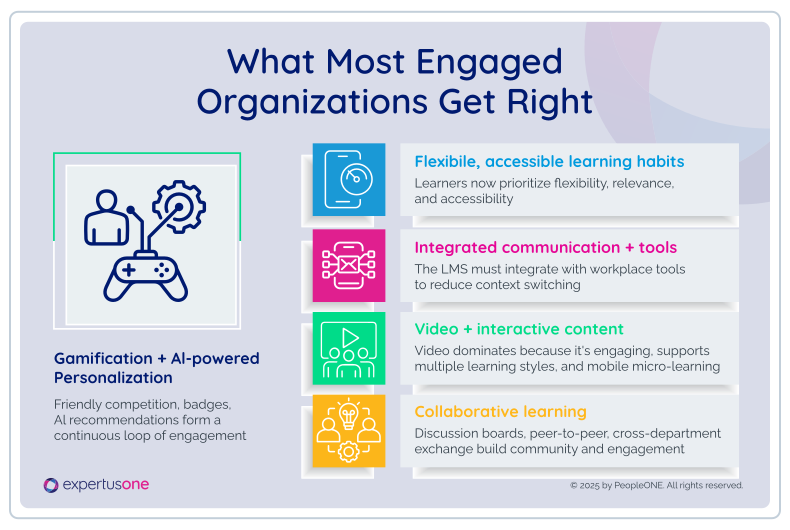
Employee learning habits have shifted dramatically over the past few years. The pandemic accelerated hybrid and remote work, changing how employees access and engage with training. Learners now prioritize flexibility, relevance, and accessibility over traditional, static training formats.
Additionally, companies are increasingly focused on employee well-being. Training programs are no longer just about compliance or skill-building—they are about engagement, collaboration, and maintaining a healthy work-life balance. Organizations that adapt to these changing habits by delivering engaging, relevant, and accessible training will see higher participation and better outcomes.
Why do LMS platforms need to streamline communication and integration?
Employees are already using a wide range of workplace tools like Slack, Microsoft Teams, and Salesforce. Training platforms that integrate with these systems prevent unnecessary context switching, reduce stress, and improve productivity.
Integrated platforms allow learners to access courses and complete assignments within tools they already use daily. For example, an employee can take a compliance course or a skills workshop directly through Teams without having to navigate to a separate LMS portal. ExpertusONE’s extended enterprise LMS supports this approach, enabling companies to deliver content within multiple apps, keeping employees engaged and connected.
Integration also simplifies reporting and administration. Training managers can track completion, generate analytics, and send reminders from a single platform, streamlining workflows and improving oversight.
Why is video-based content essential for corporate training?
Video continues to dominate learning because it is engaging, easy to consume, and supports multiple learning styles. According to industry studies, video increases retention by allowing learners to visualize processes and absorb information quickly.
Incorporating interactive elements like quizzes, polls, and scenario-based exercises further enhances engagement. For instance, ExpertusONE’s Interaction Studio enables course creators to convert static PDFs, presentations, and recorded sessions into interactive learning experiences. Employees can engage with video content on their own schedule, boosting comprehension and completion rates.
As mobile learning continues to grow, video-based microlearning ensures that employees can access content anytime, anywhere—critical for hybrid or field-based teams.
How can collaborative training environments improve engagement?
Collaboration is a core driver of engagement. Remote and hybrid work has shown that employees can be productive from anywhere, but isolation can still reduce motivation.
LMS platforms that support collaborative learning help address this challenge. Discussion boards, group projects, and peer-to-peer feedback encourage engagement and create a sense of community. ExpertusONE allows employees to interact with each other and with managers during training, reinforcing collaboration while maintaining learning outcomes.
Collaborative training also allows employees to share knowledge across departments. For example, a sales team member can participate in a cross-department workshop on customer success, exchanging insights that improve performance and foster a culture of continuous learning.
Why is healthy competition important in corporate learning?
Gamification motivates employees by introducing friendly competition. Leaderboards, badges, and recognition encourage employees to complete courses and go beyond minimum requirements.
Healthy competition also drives engagement across teams and departments. Employees are inspired to take additional courses, improve skills, and compete constructively with peers. ExpertusONE integrates gamification with AI-driven recommendations, so learners are automatically suggested the next relevant course once they complete a module. This creates a continuous learning loop, sustaining engagement and reinforcing knowledge retention.
How is AI transforming corporate learning?
Artificial Intelligence personalizes the learning experience, making training more relevant and efficient. AI analyzes employee behavior, job roles, departmental activity, and personal interests to recommend tailored courses.
For managers, AI automates routine tasks like tracking completion, assigning follow-up courses, and generating progress reports. This reduces administrative workload and frees up time for mentoring, coaching, and strategic initiatives.
AI also encourages continuous development. An employee who completes a leadership certification may be automatically recommended for an advanced project management course, while a remote worker struggling with digital productivity tools may receive tips or modules on focus and time management. This ensures learning is aligned with both individual and organizational goals.
By combining AI with collaboration, gamification, and integrated tools, organizations create a learning ecosystem that drives engagement, improves retention, and directly supports business objectives.
FAQs
Integration prevents context switching and increases productivity. Employees can access training within tools they already use, like Teams or Salesforce, keeping them engaged without navigating multiple systems.
Video content, especially when interactive, improves comprehension and retention. Learners can visualize processes, engage with quizzes, and complete content on mobile devices or while remote.
AI personalizes course recommendations based on employee roles, interests, and peer activity. This boosts engagement, reduces administrative effort, and ensures continuous skill development.
Summary:
Employee training is evolving rapidly, driven by remote and hybrid work, video-based learning, collaboration, gamification, and AI. Companies that focus on engagement, interactivity, and integration can create meaningful learning experiences, boost retention, and foster a stronger workplace culture.
How are employees’ learning habits changing?
Employee learning habits have shifted dramatically over the past few years. The pandemic accelerated hybrid and remote work, changing how employees access and engage with training. Learners now prioritize flexibility, relevance, and accessibility over traditional, static training formats.
Additionally, companies are increasingly focused on employee well-being. Training programs are no longer just about compliance or skill-building—they are about engagement, collaboration, and maintaining a healthy work-life balance. Organizations that adapt to these changing habits by delivering engaging, relevant, and accessible training will see higher participation and better outcomes.
Why do LMS platforms need to streamline communication and integration?
Employees are already using a wide range of workplace tools like Slack, Microsoft Teams, and Salesforce. Training platforms that integrate with these systems prevent unnecessary context switching, reduce stress, and improve productivity.
Integrated platforms allow learners to access courses and complete assignments within tools they already use daily. For example, an employee can take a compliance course or a skills workshop directly through Teams without having to navigate to a separate LMS portal. ExpertusONE’s extended enterprise LMS supports this approach, enabling companies to deliver content within multiple apps, keeping employees engaged and connected.
Integration also simplifies reporting and administration. Training managers can track completion, generate analytics, and send reminders from a single platform, streamlining workflows and improving oversight.
Why is video-based content essential for corporate training?
Video continues to dominate learning because it is engaging, easy to consume, and supports multiple learning styles. According to industry studies, video increases retention by allowing learners to visualize processes and absorb information quickly.
Incorporating interactive elements like quizzes, polls, and scenario-based exercises further enhances engagement. For instance, ExpertusONE’s Interaction Studio enables course creators to convert static PDFs, presentations, and recorded sessions into interactive learning experiences. Employees can engage with video content on their own schedule, boosting comprehension and completion rates.
As mobile learning continues to grow, video-based microlearning ensures that employees can access content anytime, anywhere—critical for hybrid or field-based teams.
How can collaborative training environments improve engagement?
Collaboration is a core driver of engagement. Remote and hybrid work has shown that employees can be productive from anywhere, but isolation can still reduce motivation.
LMS platforms that support collaborative learning help address this challenge. Discussion boards, group projects, and peer-to-peer feedback encourage engagement and create a sense of community. ExpertusONE allows employees to interact with each other and with managers during training, reinforcing collaboration while maintaining learning outcomes.
Collaborative training also allows employees to share knowledge across departments. For example, a sales team member can participate in a cross-department workshop on customer success, exchanging insights that improve performance and foster a culture of continuous learning.
Why is healthy competition important in corporate learning?
Gamification motivates employees by introducing friendly competition. Leaderboards, badges, and recognition encourage employees to complete courses and go beyond minimum requirements.
Healthy competition also drives engagement across teams and departments. Employees are inspired to take additional courses, improve skills, and compete constructively with peers. ExpertusONE integrates gamification with AI-driven recommendations, so learners are automatically suggested the next relevant course once they complete a module. This creates a continuous learning loop, sustaining engagement and reinforcing knowledge retention.
How is AI transforming corporate learning?
Artificial Intelligence personalizes the learning experience, making training more relevant and efficient. AI analyzes employee behavior, job roles, departmental activity, and personal interests to recommend tailored courses.
For managers, AI automates routine tasks like tracking completion, assigning follow-up courses, and generating progress reports. This reduces administrative workload and frees up time for mentoring, coaching, and strategic initiatives.
AI also encourages continuous development. An employee who completes a leadership certification may be automatically recommended for an advanced project management course, while a remote worker struggling with digital productivity tools may receive tips or modules on focus and time management. This ensures learning is aligned with both individual and organizational goals.
By combining AI with collaboration, gamification, and integrated tools, organizations create a learning ecosystem that drives engagement, improves retention, and directly supports business objectives.
FAQs
Integration prevents context switching and increases productivity. Employees can access training within tools they already use, like Teams or Salesforce, keeping them engaged without navigating multiple systems.
Video content, especially when interactive, improves comprehension and retention. Learners can visualize processes, engage with quizzes, and complete content on mobile devices or while remote.
AI personalizes course recommendations based on employee roles, interests, and peer activity. This boosts engagement, reduces administrative effort, and ensures continuous skill development.


