Examine the top enterprise LMS platforms side-by-side across 10 important considerations.
Choosing an enterprise LMS is a five-to-ten-year decision. Maybe you’re replacing a platform being sunset, or you’ve outgrown your previous one. Whatever brought you here, the questions are the same: Will it handle compliance at scale? Can it serve employees, customers, and partners from one system? What will it actually cost to run?
This page scores ExpertusONE against 11 widely used platforms, ranking them based on the vendor’s own published material. See which one holds up against your requirements.
Pick your platform
Select a platform to see how it compares to ExpertusONE.
Each platform is rated on the same ten factors using the corresponding vendor’s published material including their website, product documentation, release notes, and public roadmap. Each factor was then scored from 0 to 100%. If a vendor hasn’t published information on a factor, it scores lower, and we note it in the detailed comparison.
An outside view
Craig Weiss is CEO and Lead Analyst of The Craig Weiss Group and has written the E-Learning 24/7 blog since 2009. He tracks hundreds of learning systems and is known for saying what he thinks about all of them. He compares ExpertusONE and Cornerstone side by side. His view, not ours.
Craig Weiss is CEO and Lead Analyst of The Craig Weiss Group and has written the E-Learning 24/7 blog since 2009. He tracks hundreds of learning systems and is known for saying what he thinks about all of them. He compares ExpertusONE and Cornerstone side by side. His view, not ours.
Comparing platforms is half the job. The other half is proving the choice to the people who sign off and getting the move done without surprises. These tools help with both, whether you’re replacing a legacy system or searching for a replacement.
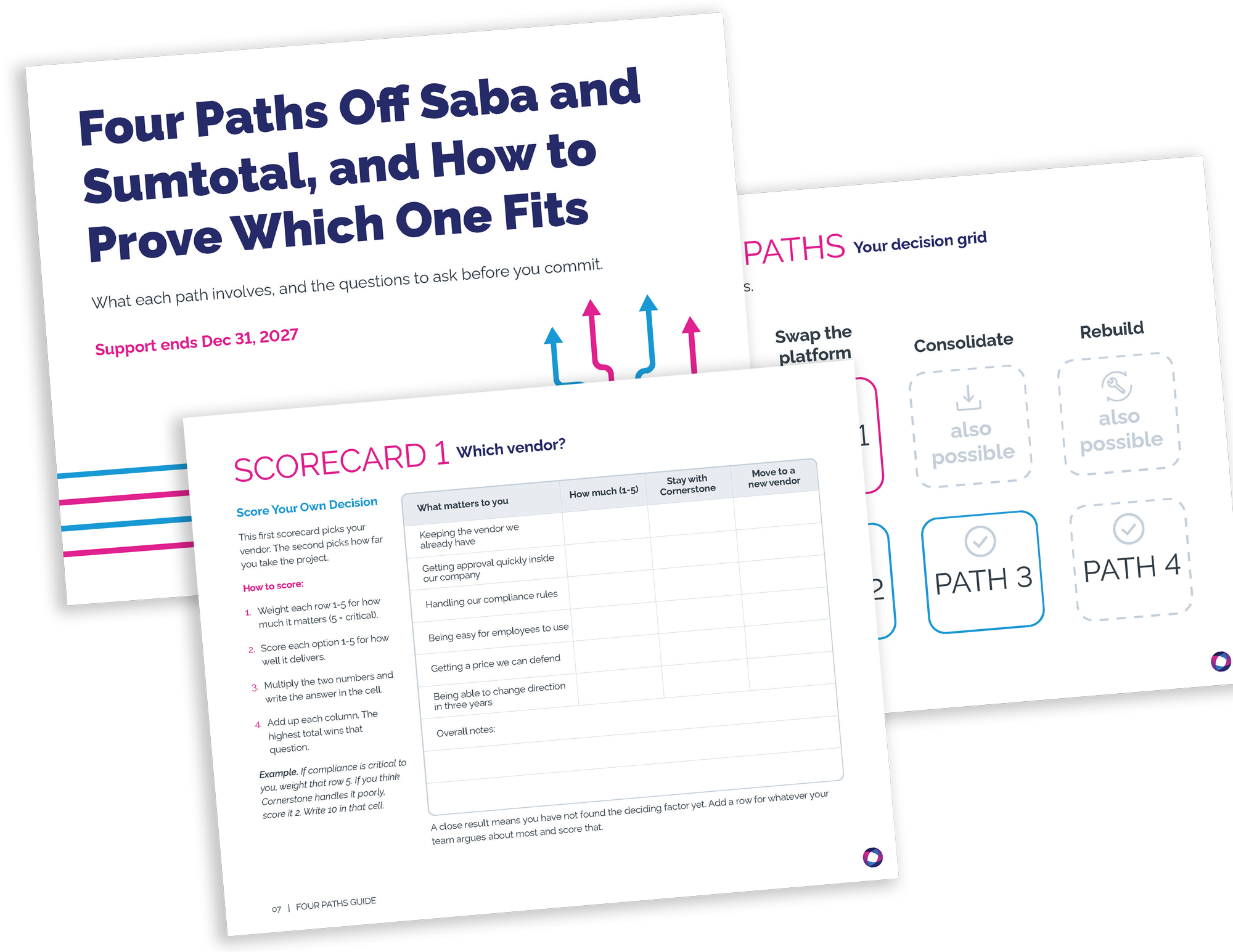
Four paths off Saba and SumTotal,
and how to prove which one fits
There are four realistic ways to leave a sunsetting platform, and each one is right for someone. This guide lays out all four with a scorecard so you can test them against your own situation instead of taking a vendor’s word for it.
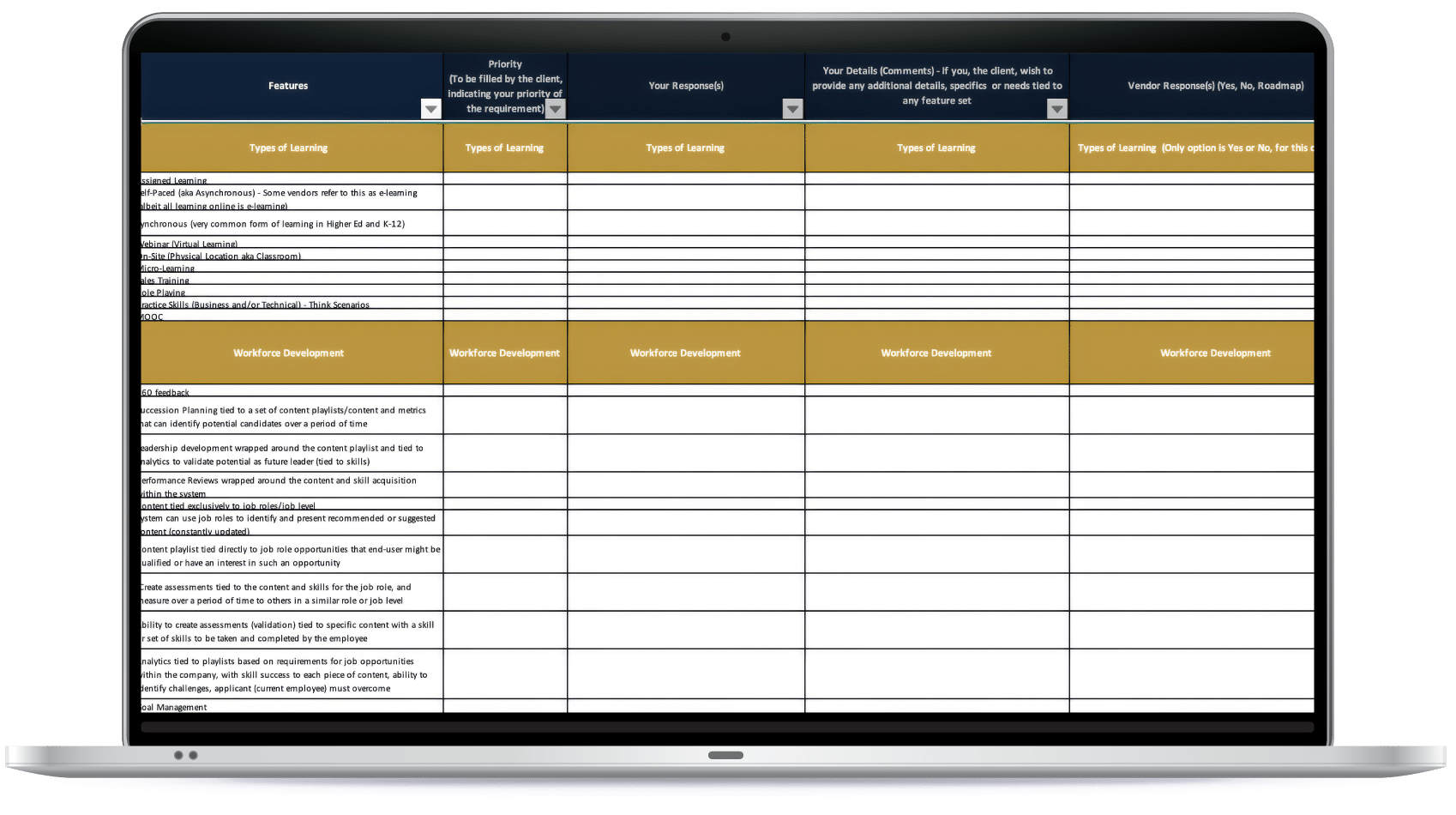
Most RFPs are copied from the last one and get vague answers back. This template, built with Craig Weiss, asks the questions that force a specific answer, so you can compare vendors on facts instead of promises.
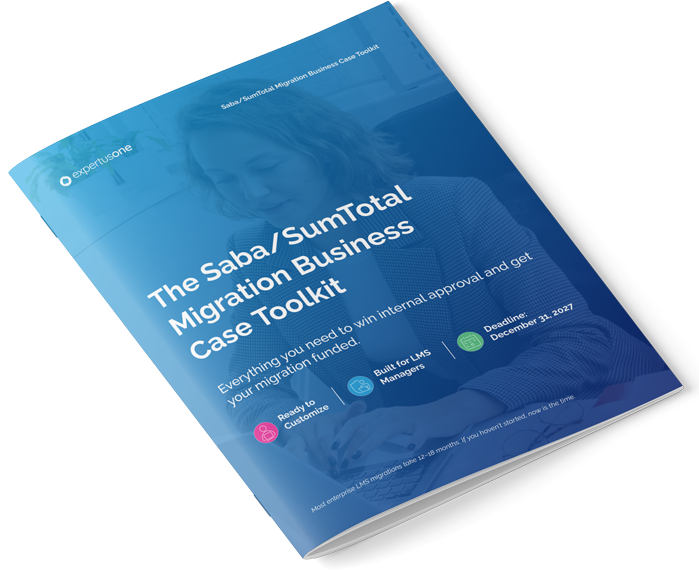
Your CFO does not care which LMS is better. They care what it costs, what happens if you wait, and who is on the hook. This toolkit gives you the stakeholder map, risk matrix, cost-of-doing-nothing calculator, timeline, and a ready-made deck so you walk into that meeting with the answers.
Once the decision is made, the risk moves to execution. This checklist covers every step from signed contract to go-live, so nothing gets missed while your old platform is still running.
Comparing platforms is half the job. The other half is proving the choice to the people who sign off and getting the move done without surprises. These tools help with both, whether you’re replacing a legacy system or searching for a replacement.
Four paths off Saba and SumTotal, and how to prove which one fits
There are four realistic ways to leave a sunsetting platform, and each one is right for someone. This guide lays out all four with a scorecard so you can test them against your own situation instead of taking a vendor’s word for it.
Most RFPs are copied from the last one and get vague answers back. This template, built with Craig Weiss, asks the questions that force a specific answer, so you can compare vendors on facts instead of promises.
Your CFO does not care which LMS is better. They care what it costs, what happens if you wait, and who is on the hook. This toolkit gives you the stakeholder map, risk matrix, cost-of-doing-nothing calculator, timeline, and a ready-made deck so you walk into that meeting with the answers.
Your CFO does not care which LMS is better. They care what it costs, what happens if you wait, and who is on the hook. This toolkit gives you the stakeholder map, risk matrix, cost-of-doing-nothing calculator, timeline, and a ready-made deck so you walk into that meeting with the answers.
There is no single best enterprise LMS. The right platform depends on who you train, how much compliance you manage, how many audiences and business units you support, and what you can afford to run over five years. Compare platforms on those factors rather than on feature lists.
Start with the factors that are hardest to change after you sign: compliance, multi-audience support, total cost of ownership, migration effort, and the vendor’s long-term commitment to the product. Score each platform on the same criteria, using published evidence, before you issue an RFP.
An enterprise LMS is built with learning as its core product. A talent suite bundles learning with performance, recruiting, compensation, and other HR functions. Talent suites can simplify vendor management, but learning is often one module among many and may receive less investment.
Every competitor fact comes from that vendor’s own published material and from independent analyst research, with a link and a verified date. We do not use review sites. Where a vendor has not published information, we say so.